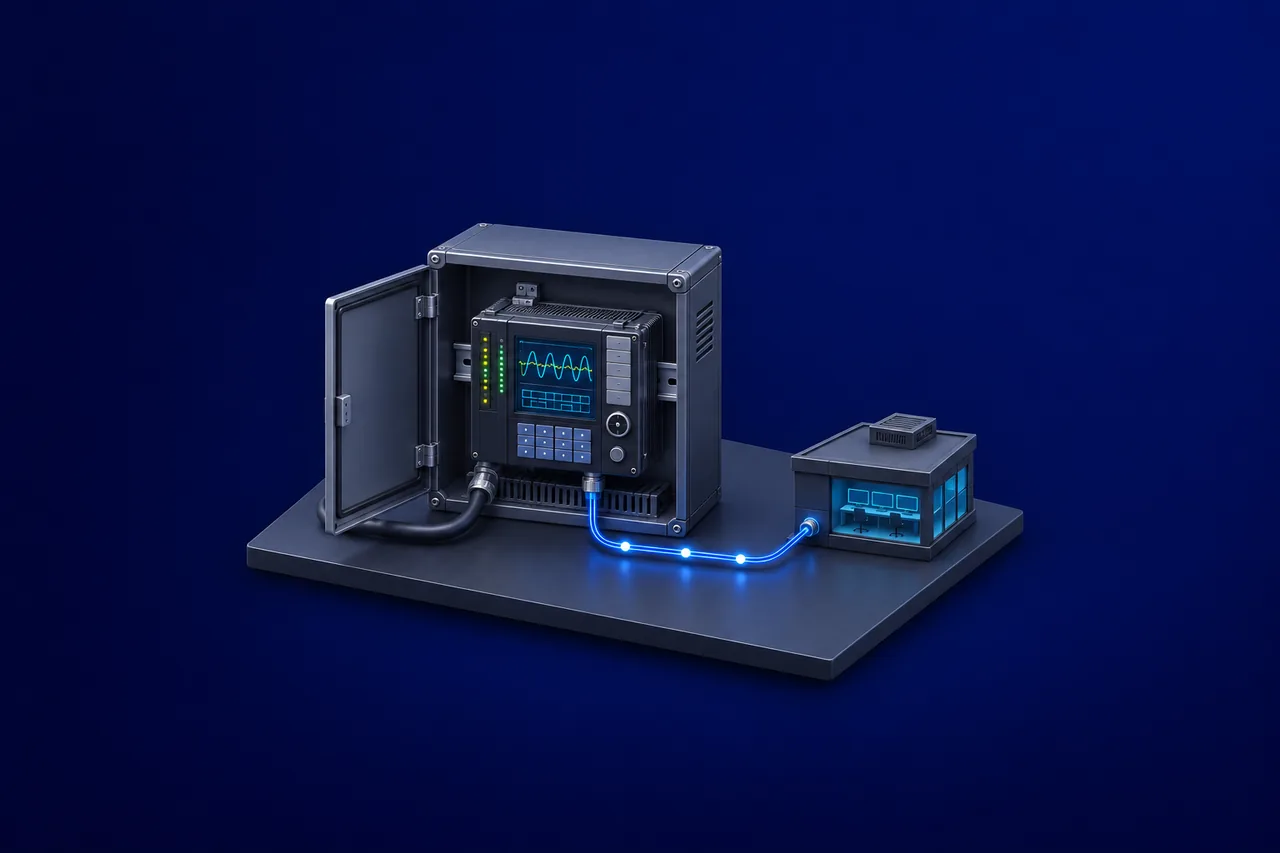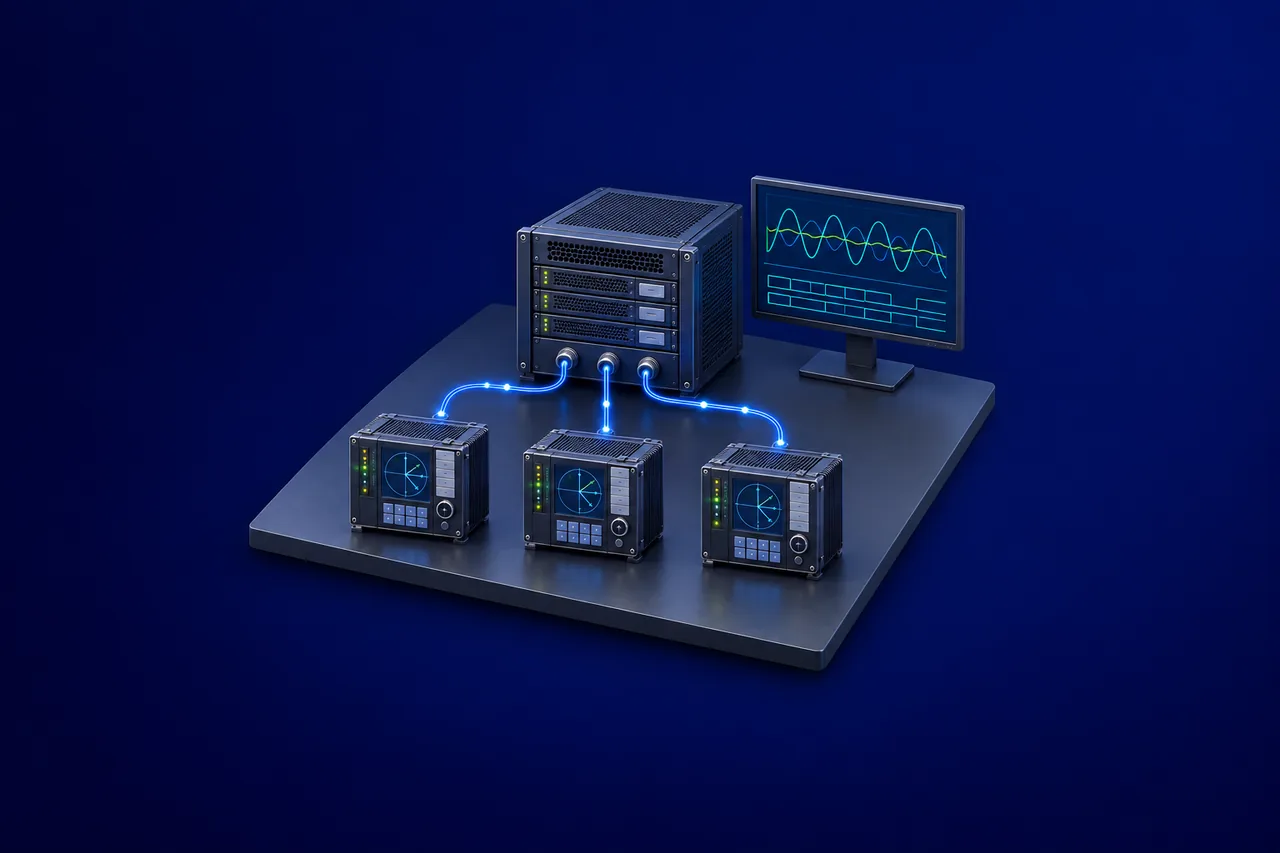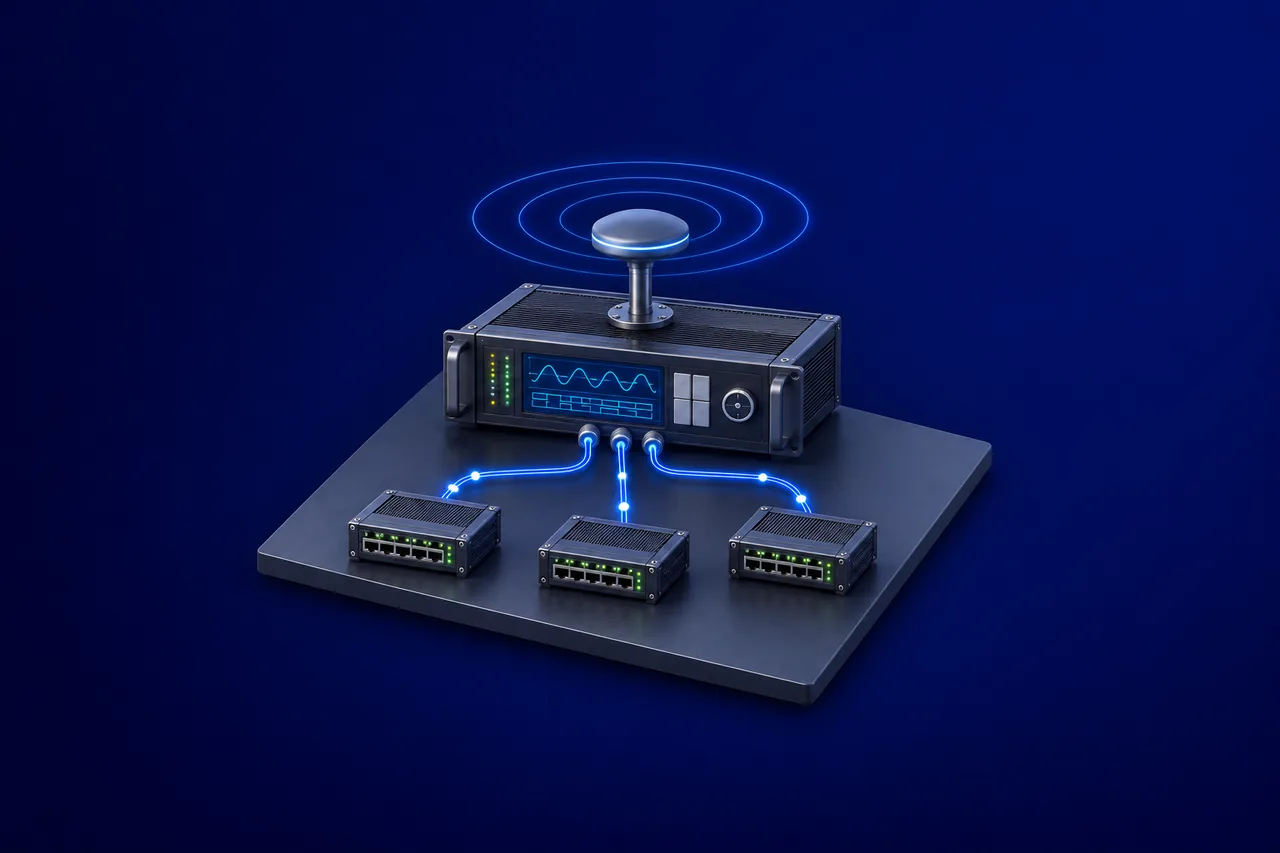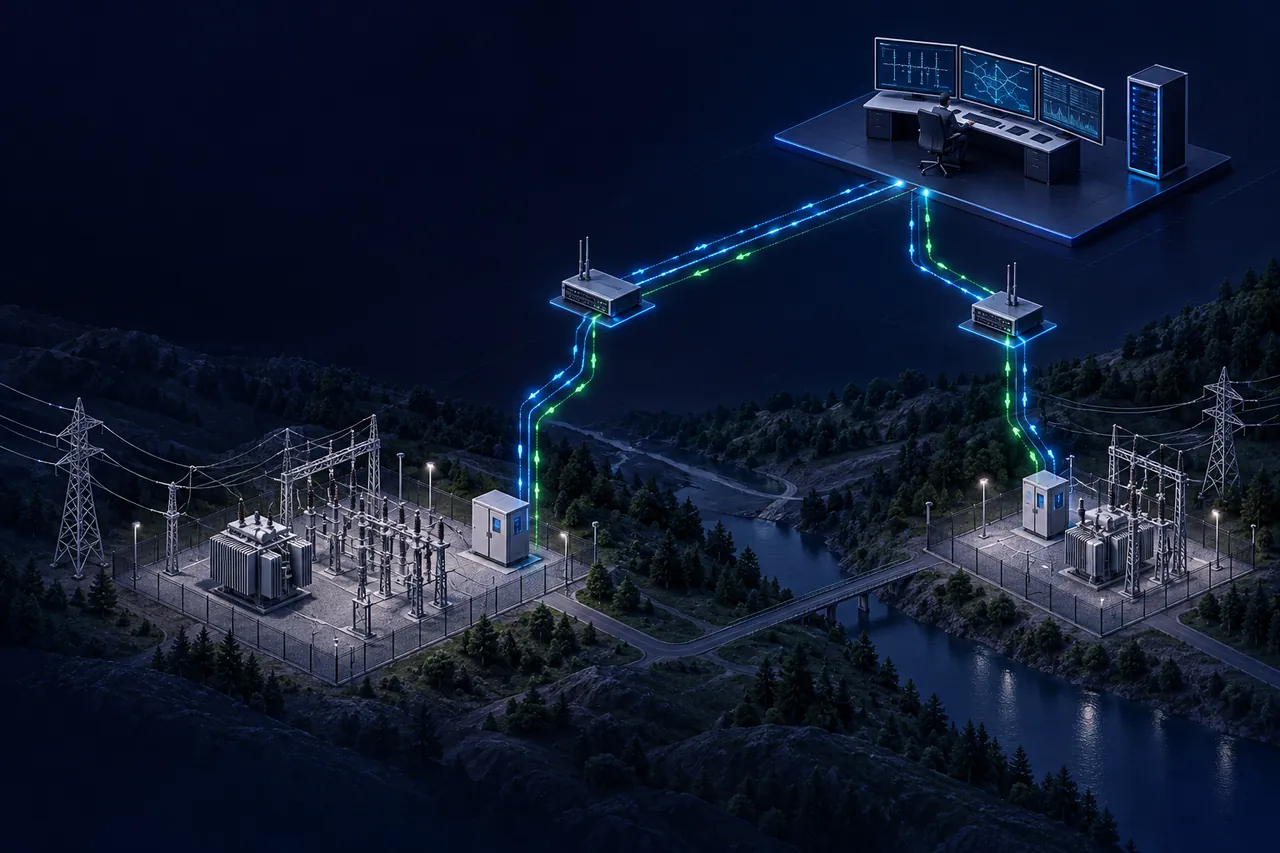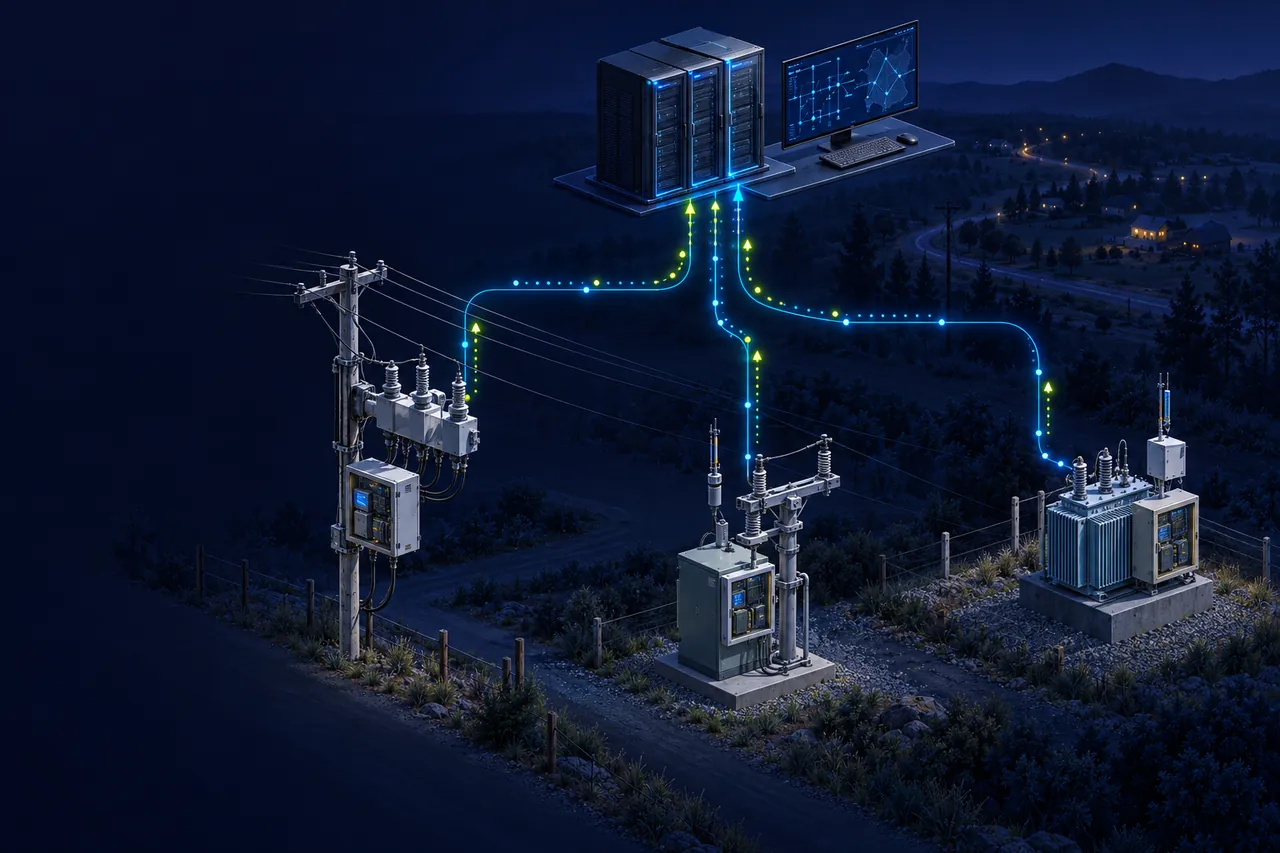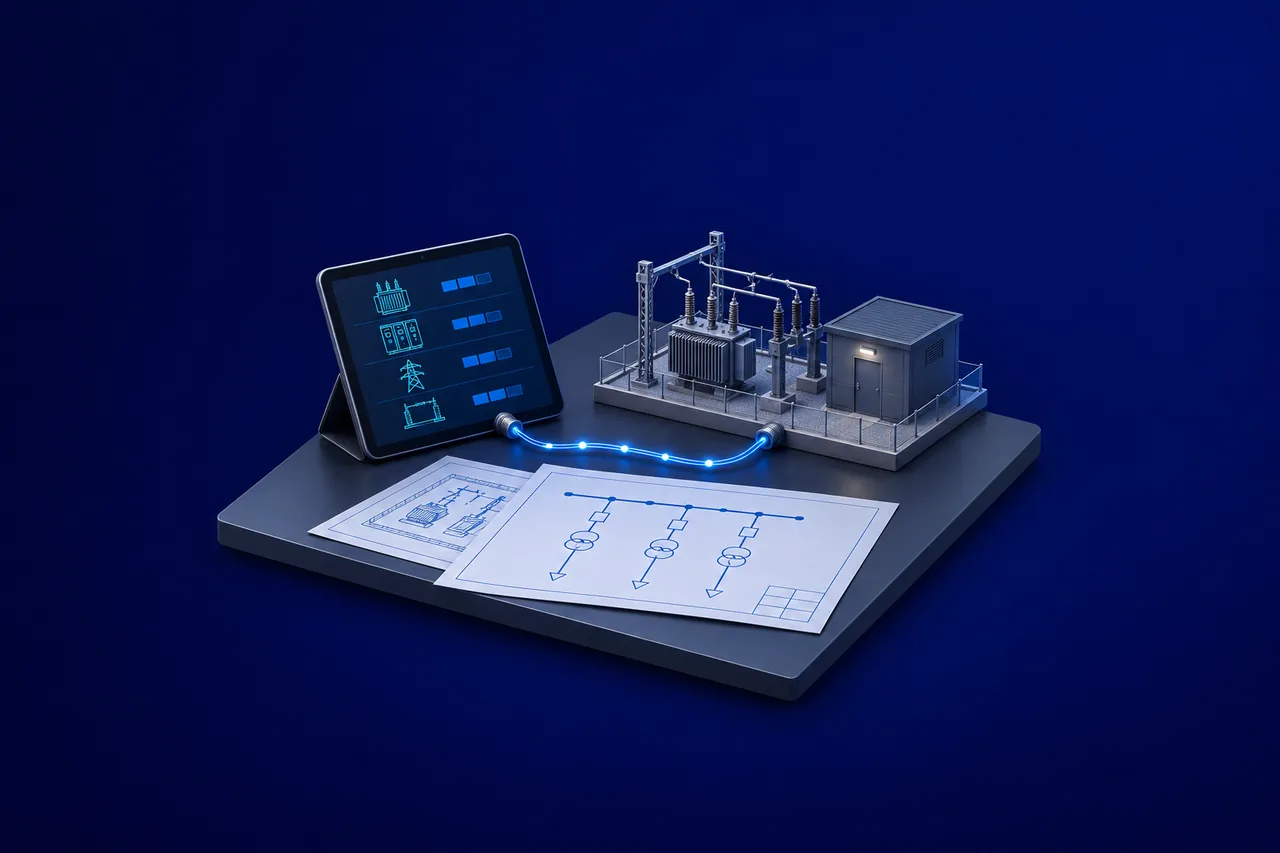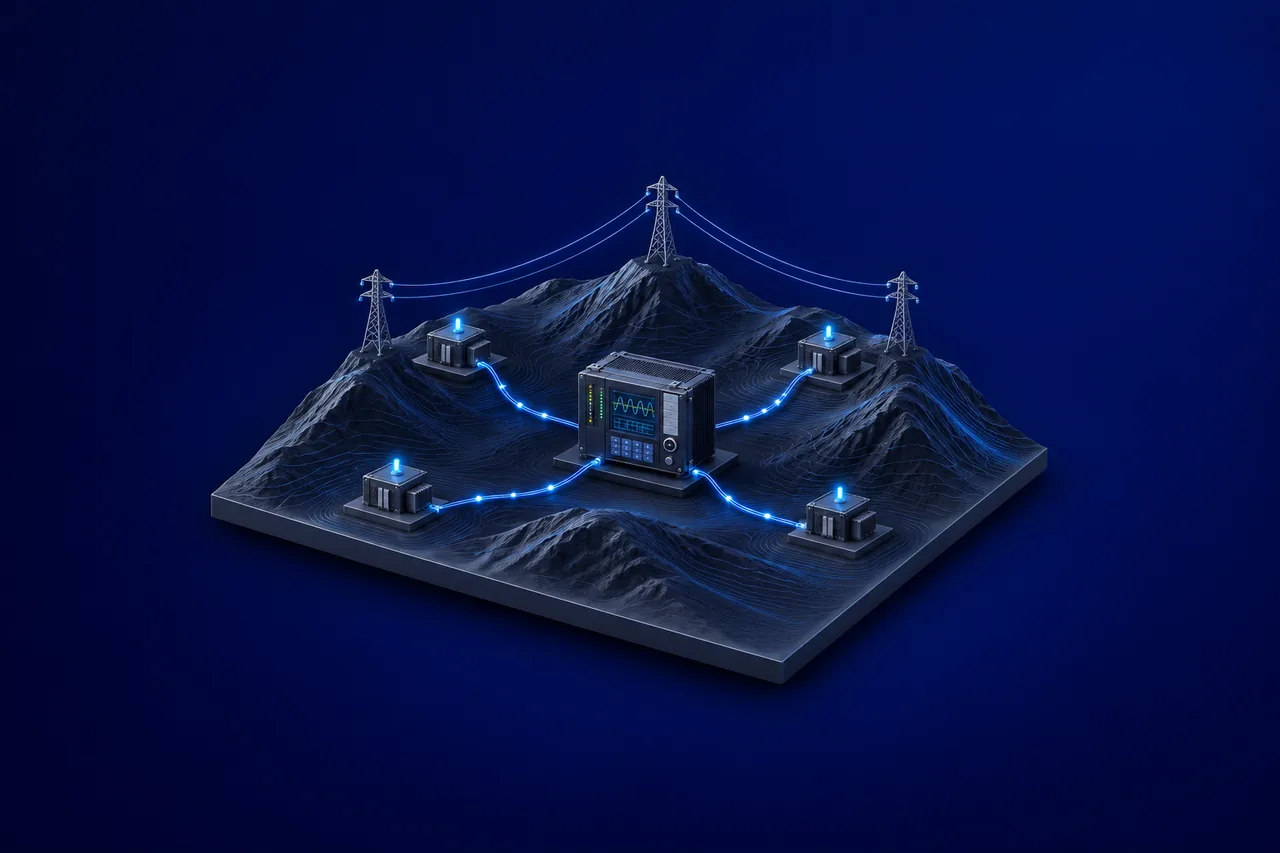
A synchrophasor is a synchronized measurement of a signal described as a phasor. Phasor measurement units (PMUs) measure the power grid and transmit that data, forming networks to monitor and control it in real time.
History and future
Three inventions made the technology possible: Steinmetz's phasor representation (1893), GPS (1973), and Phadke's SCDR (1979). The first PMU prototype arrived in 1988 and the first commercial one in 1992.
Key fact
At 60 frames per second, voltage and current phasors represent a large amount of information.
Applications
They make protection more effective and simplify system state estimation; they make it possible to control overvoltages, detect voltage collapse to shed load, and monitor angular stability.
- Thermal monitoring of transmission lines
- Voltage instability
- Advanced control schemes
- Distributed generation control
- Event detection
Components
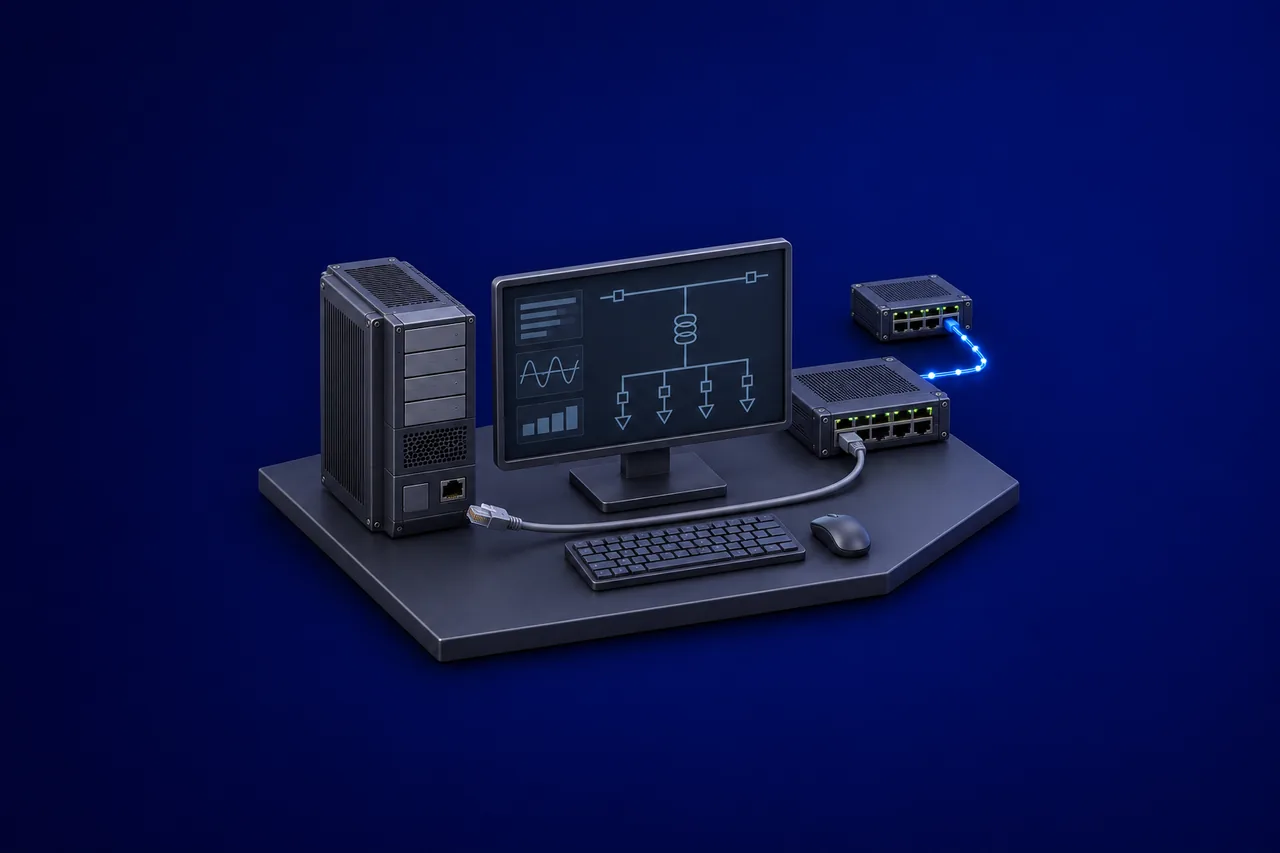
The PMU measures and delivers synchrophasors, frequency, ROCOF, and timestamp; the PDC concentrates and processes the data from several PMUs. IEEE defines class P for protection and class M for analysis.
- Synchrophasor data
Messages
IEEE C37.118.2 defines four messages: data, configuration, header, and command. All share fields for synchronization, identification, timestamp, and integrity verification (SYNC, FRAMESIZE, IDCODE, SOC, FRACSEC, and CHK).
Bandwidth and storage
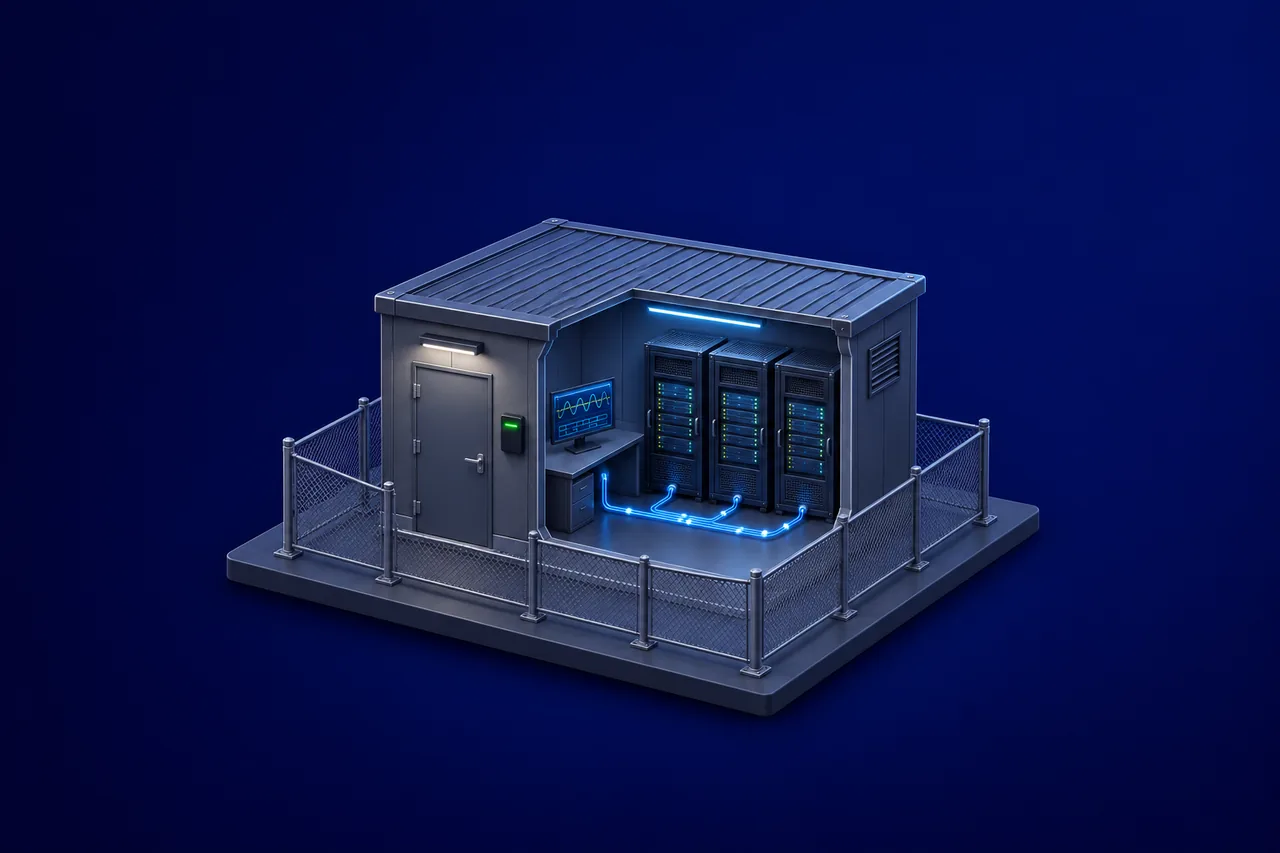
A PMU with 8 phasors at 60 messages per second needs 61.2 kbps over serial and 84.4 kbps over TCP, more than many serial ports can handle (57.6 kbps). One PDC per substation concentrates the data and reduces bandwidth and storage.