Saltar al contenido principal
Axon Group
Digital substations

Time synchronization in a digital substation is essential for Sampled Values

Time synchronization is essential for power automation, but it becomes even more critical in digital substations that use Sampled Values, the IEC 61850 protocol that streams voltage and current measurements in real time…

Digital substations Axon Group blog

Time synchronization is essential for power automation, but it becomes even more critical in digital substations that use Sampled Values, the IEC 61850 protocol that streams voltage and current measurements in real time to protection and control equipment.

0SmpSynch · Not synchronized
1SmpSynch · Local synchronization
2SmpSynch · Global synchronization

SmpSynch = 0 · Not synchronized

Without synchronization, critical failures occur: Sampled Values frames are not processed correctly, analog values appear frozen at zero, and protection functions are blocked in the IEDs.

  • Sampled Values subscription failure in protection or metering IEDs
  • Blocking of protection functions
  • False anomalies or electrical faults
  • PTP synchronization function disabled in the IED
  • No grand master clock on the network (GPS failure)
  • Grand master clock switching on the network

Key fact

97% of Sampled Values problems in digital substations are caused by time synchronization.

SmpSynch = 1 · Local synchronization

With local synchronization, reliable time references are lost. This affects the accuracy of event reports and fault records, and delays appear when reconstructing current and voltage variables.

  • Loss of a reliable relative time reference
  • Delays in variable reconstruction
  • Loss of accuracy and quality of the master clock PTP signal
  • GPS satellite reception failures
  • An ordinary clock taking over as grand master clock
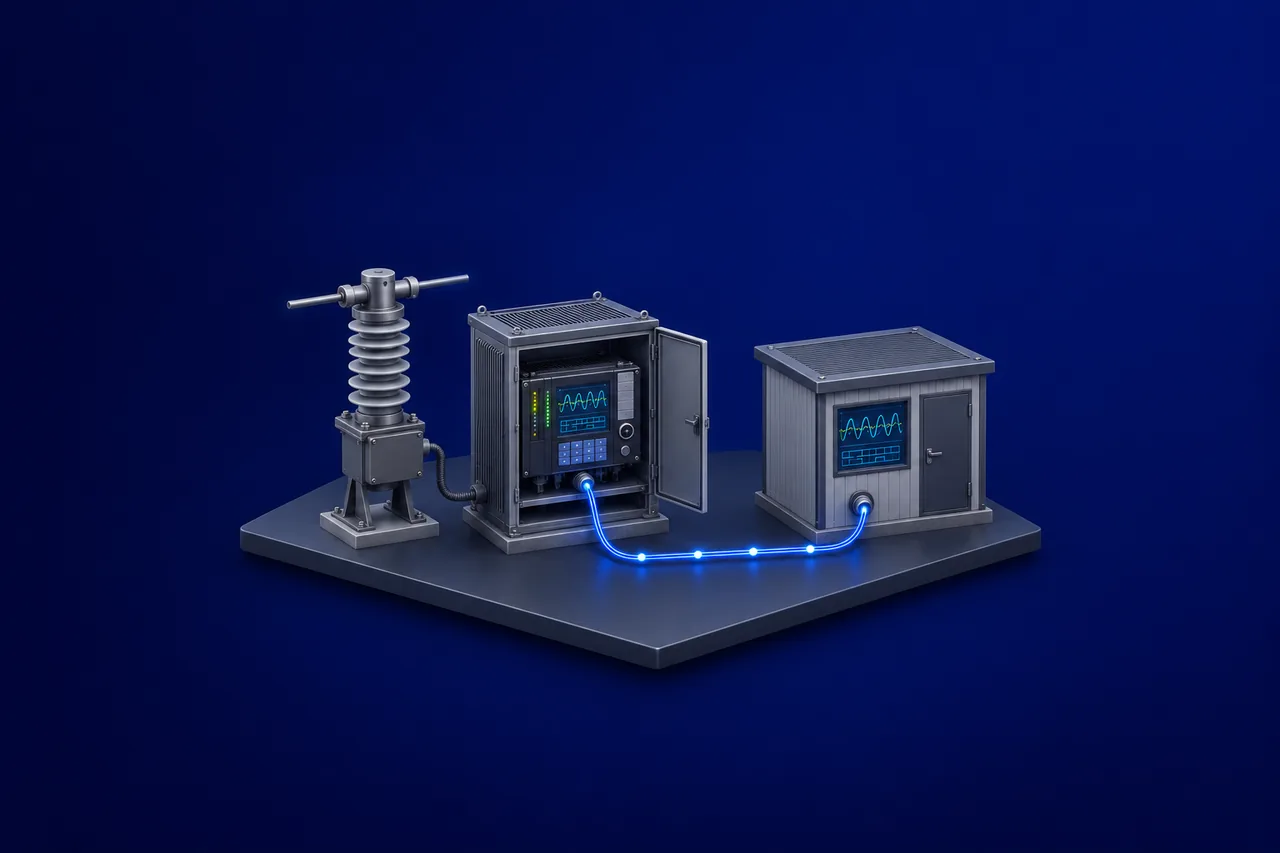
Time synchronization in the digital substation: the GPS feeds the grand master clock, which synchronizes the merging units and the IEDs over PTP; the SmpSynch field of the Sampled Values frames is 0 when not synchronized, 1 with local synchronization, and 2 with global synchronizationGPSantennaGrand master clockmaster clockSwitch PTPMU 1slave PTPMU 2slave PTPIED 1slave PTPIED 2slave PTPSmpSynch VALUE0 · Not synchronizedfunctions blocked1 · Localno reliable reference2 · Globalstable GPS and PTPTime synchronization in the digital substation: the GPS feeds the grand master clock, which synchronizes the merging units and the IEDs over PTP; the SmpSynch field of the Sampled Values frames is 0 when not synchronized, 1 with local synchronization, and 2 with global synchronizationGPSantennaGrand master clockmaster clockSwitch PTPMU 1slaveMU 2slaveIED 1slaveIED 2slaveSmpSynch IN SV FRAMES0 · Not synchronizedfunctions blocked1 · Localno reliable reference2 · Globalstable GPS and PTP
Figure 1. The GPS and the grand master clock synchronize the merging units and the IEDs over PTP.
  • PTP synchronization

SmpSynch = 2 · Global synchronization

With global synchronization, all analog signals in the substation start their sample count at the same time: the IEDs operate correctly and time references are accurate.

  • Same sample count start for all analog signals
  • Accurate time reference when generating events
  • Stable GPS synchronization signal
  • BMCA priority parameters properly configured in the ordinary clocks
  • Ordinary clocks configured as Slave only

Article written by

Axon Group team

Digital substations

View more articles
Related product

Put it into practice with AG

See the technical glossary ›

AG Empowering

Want to train on this topic?

Explore the AG Empowering programs and bootcamps and keep learning with our team of specialists.

Go to AG Empowering

Questions about our training?

Get in touch and we will help you find the right program for your team.