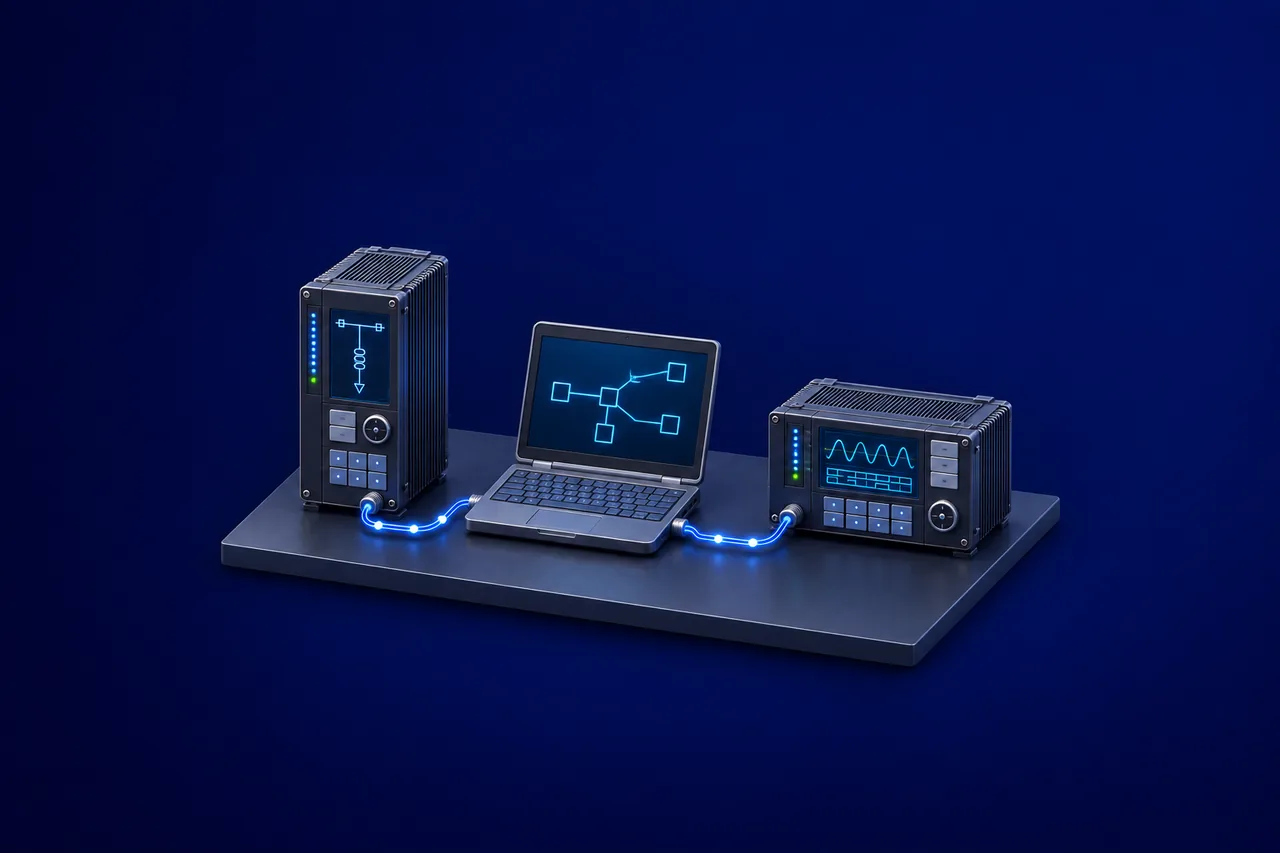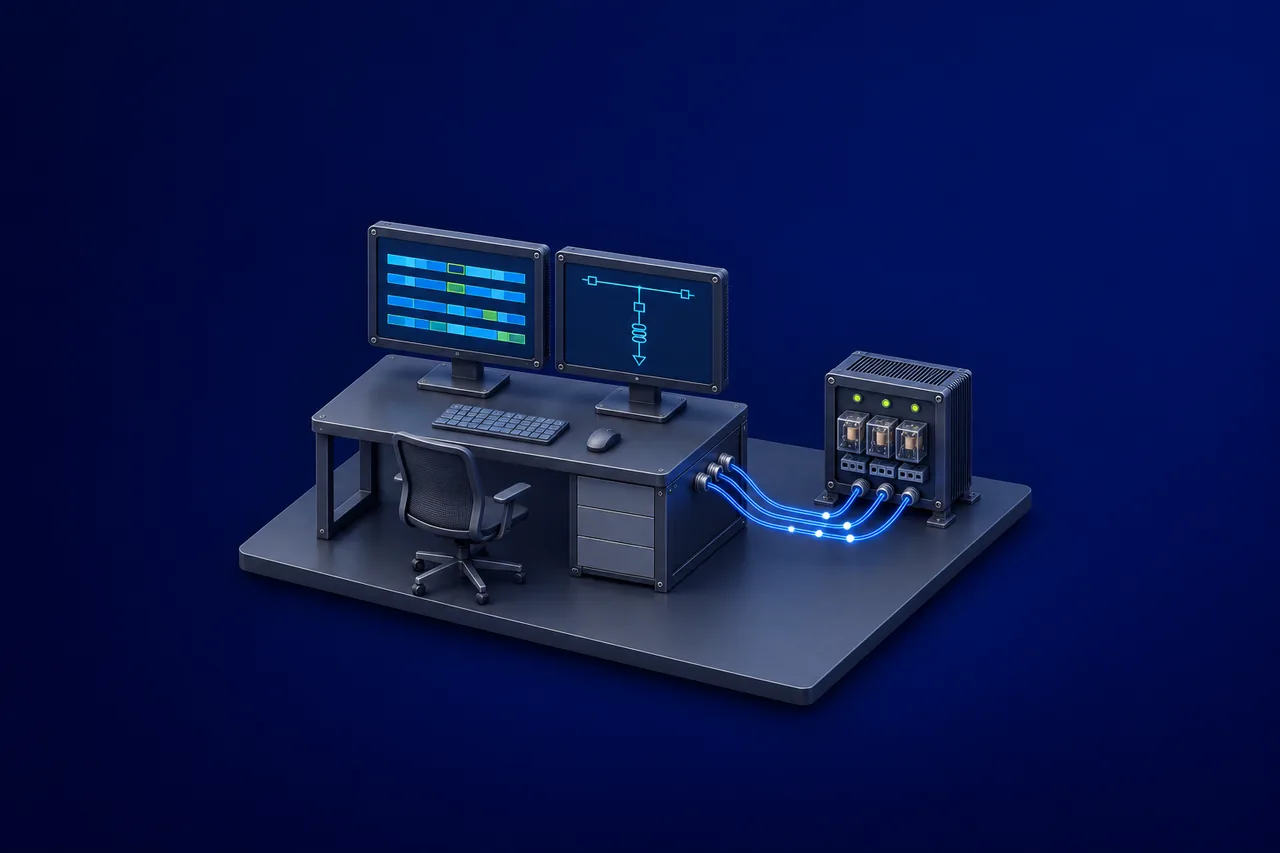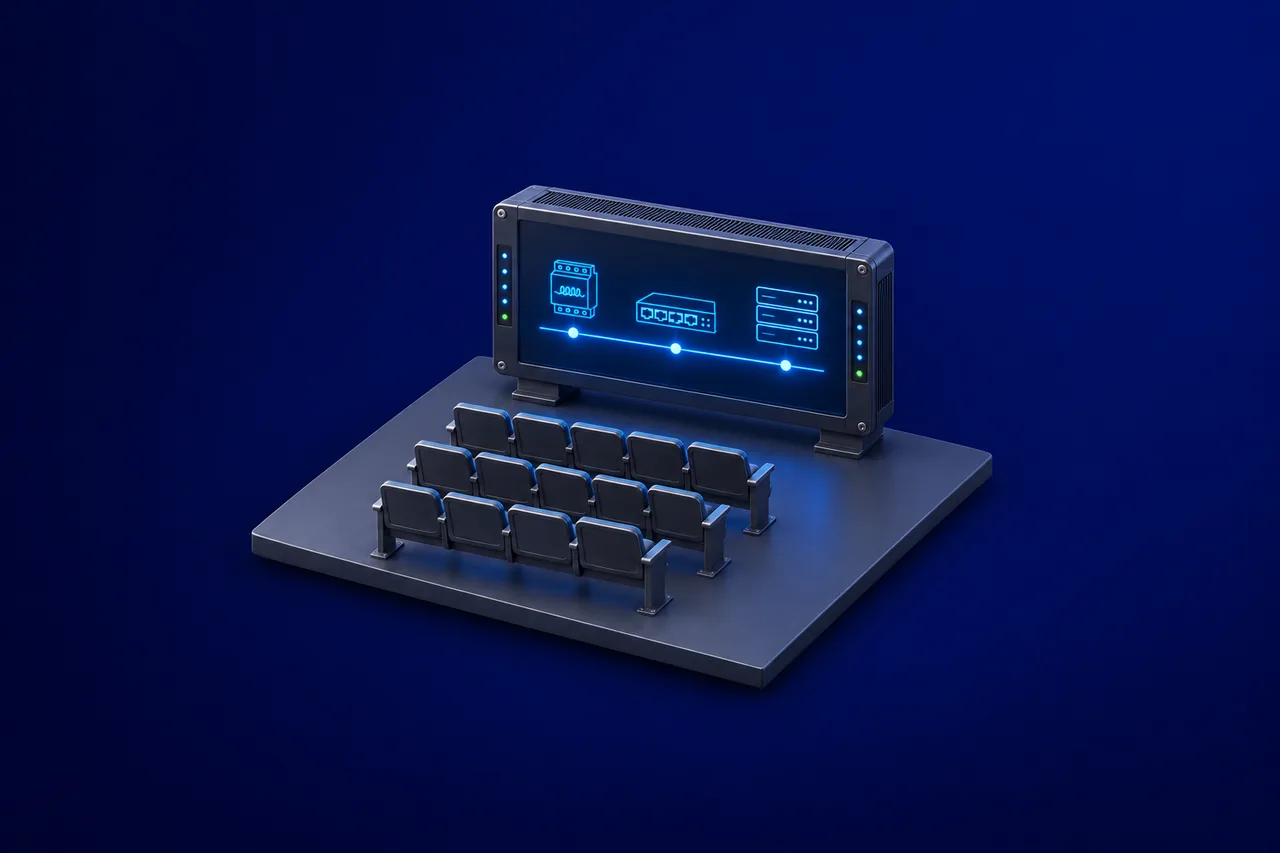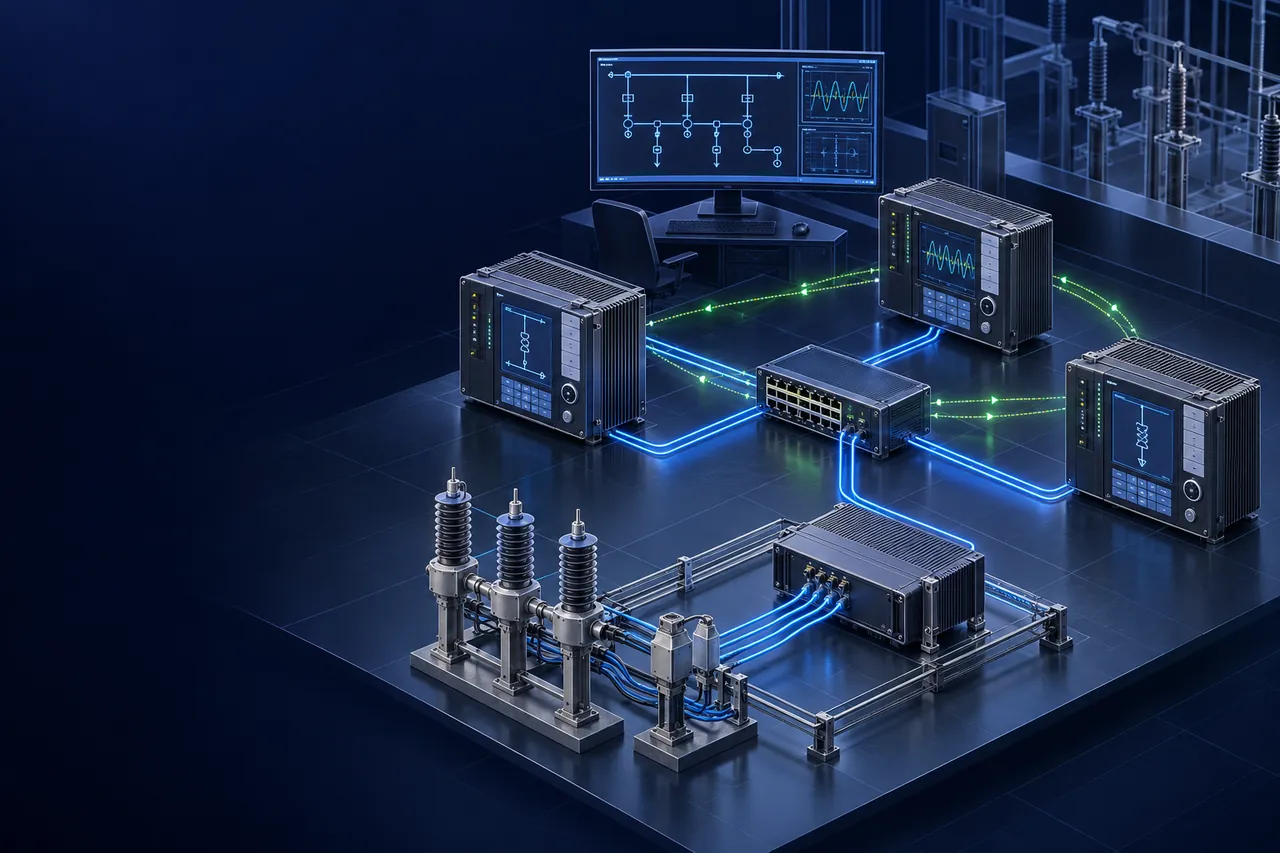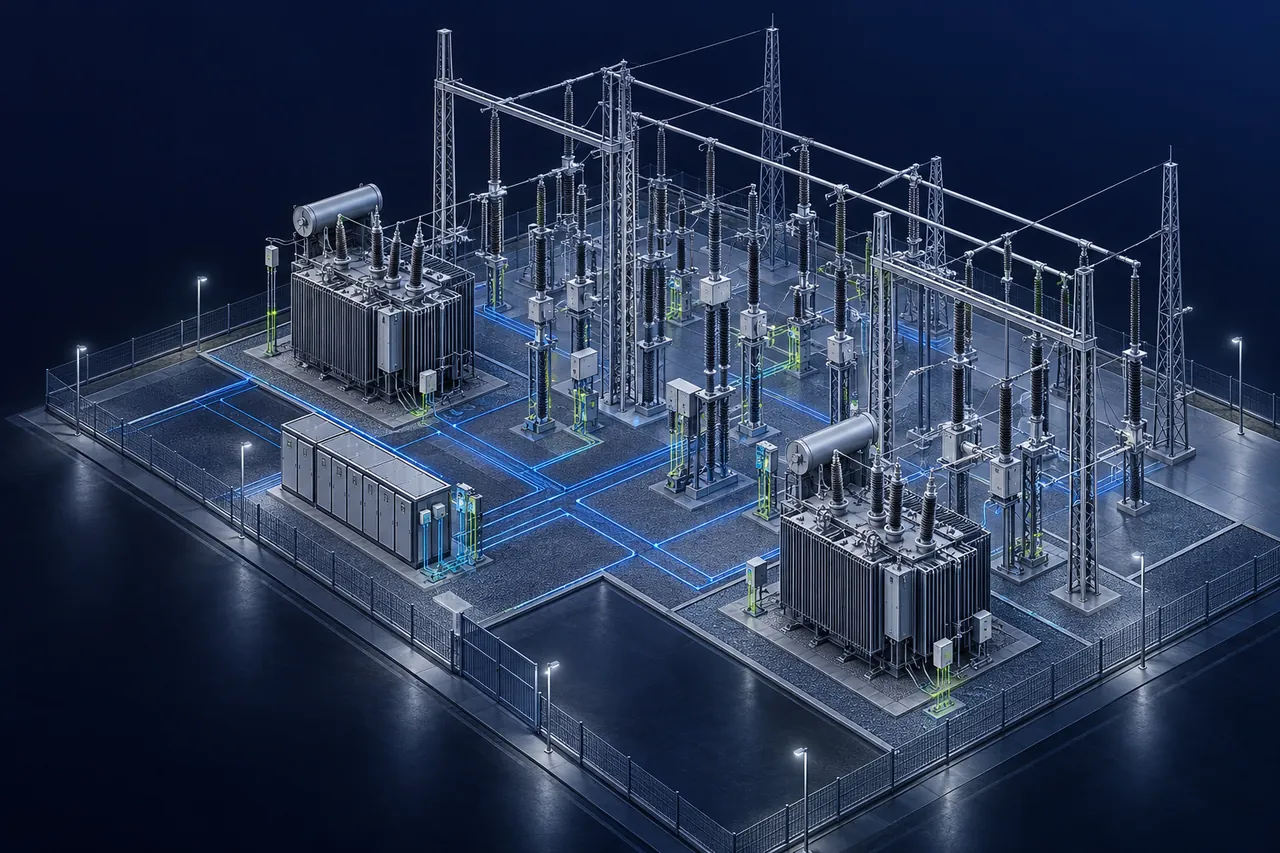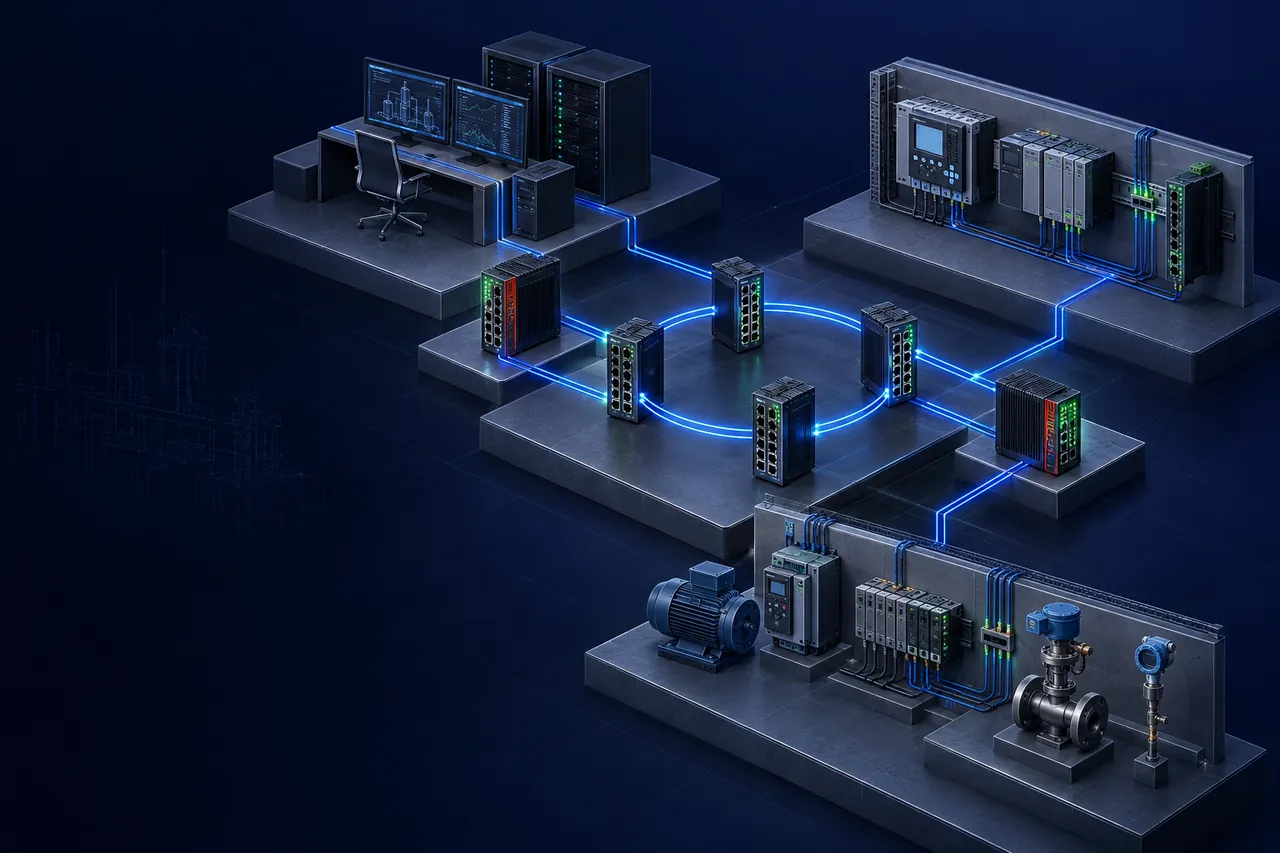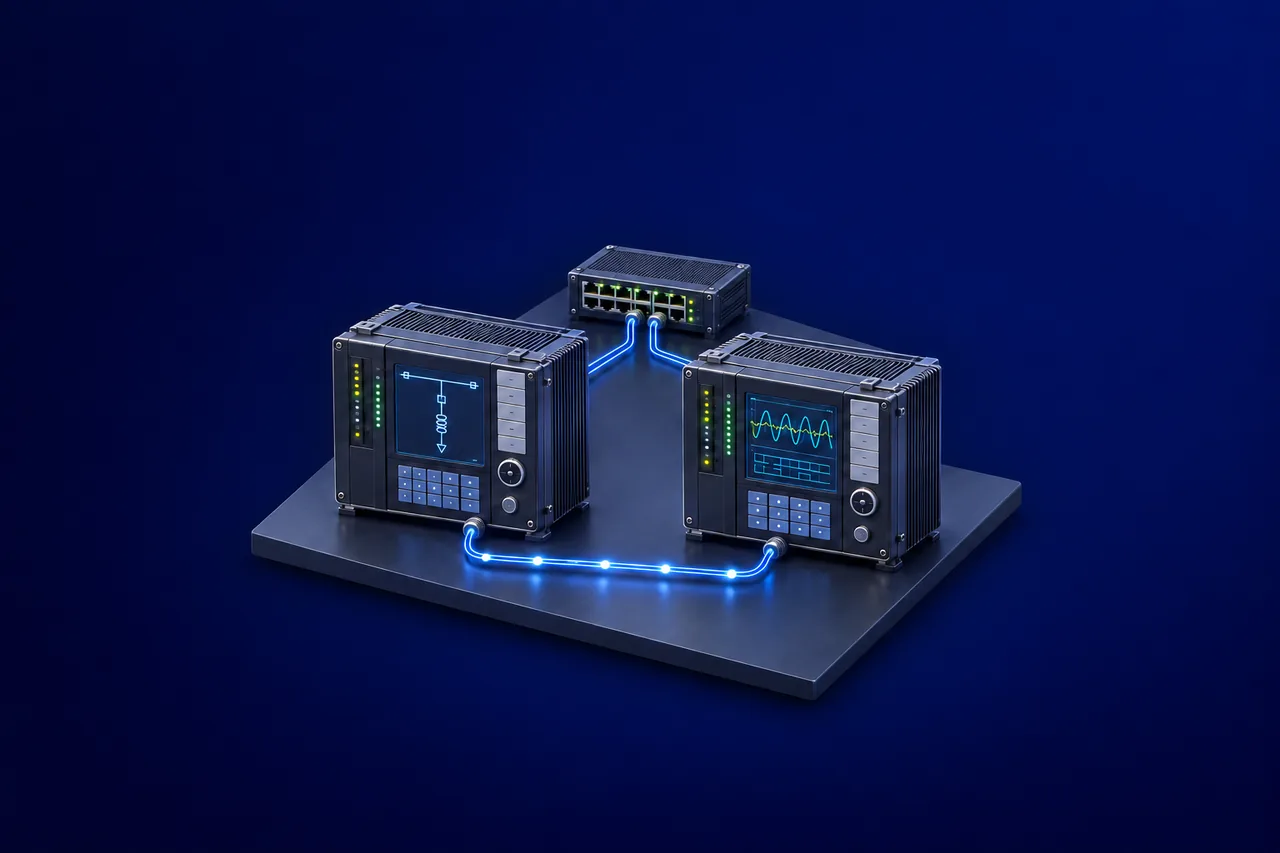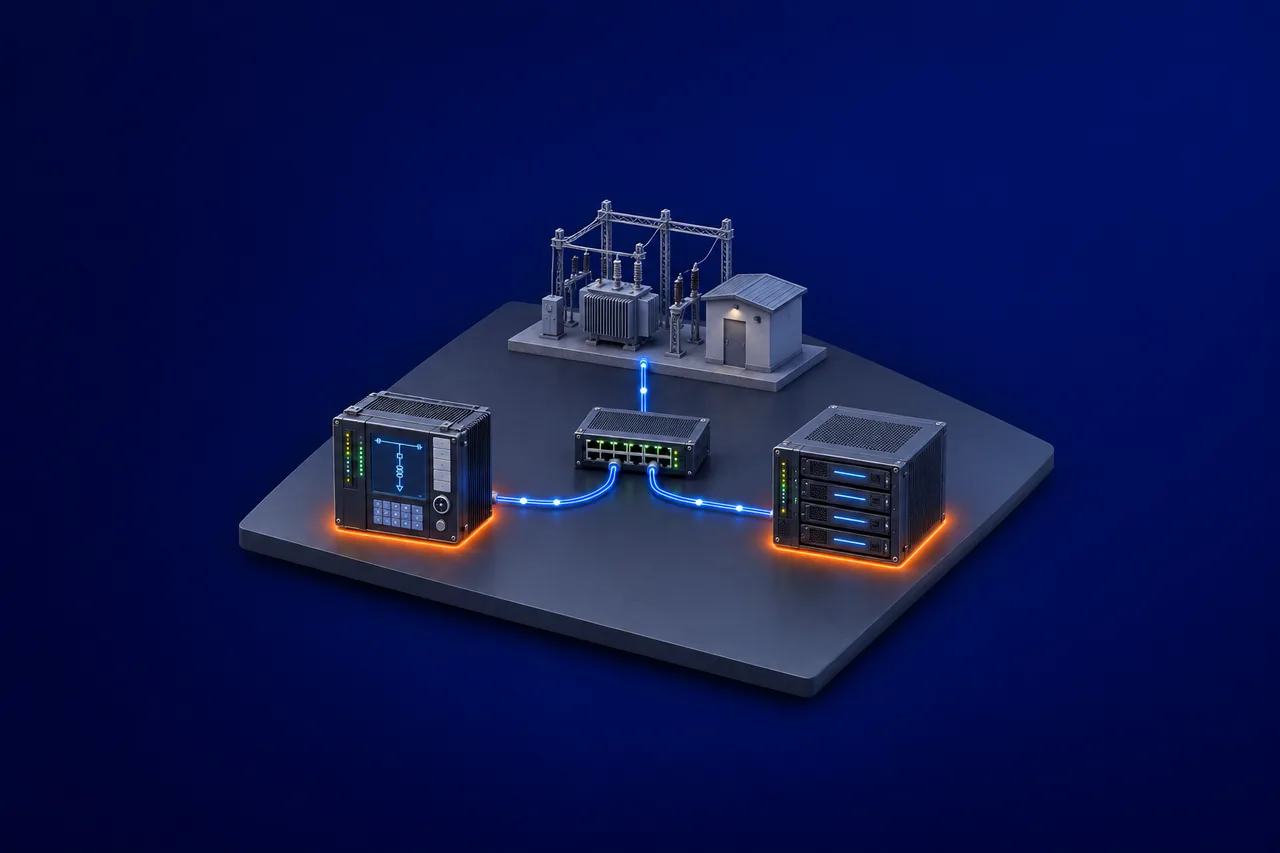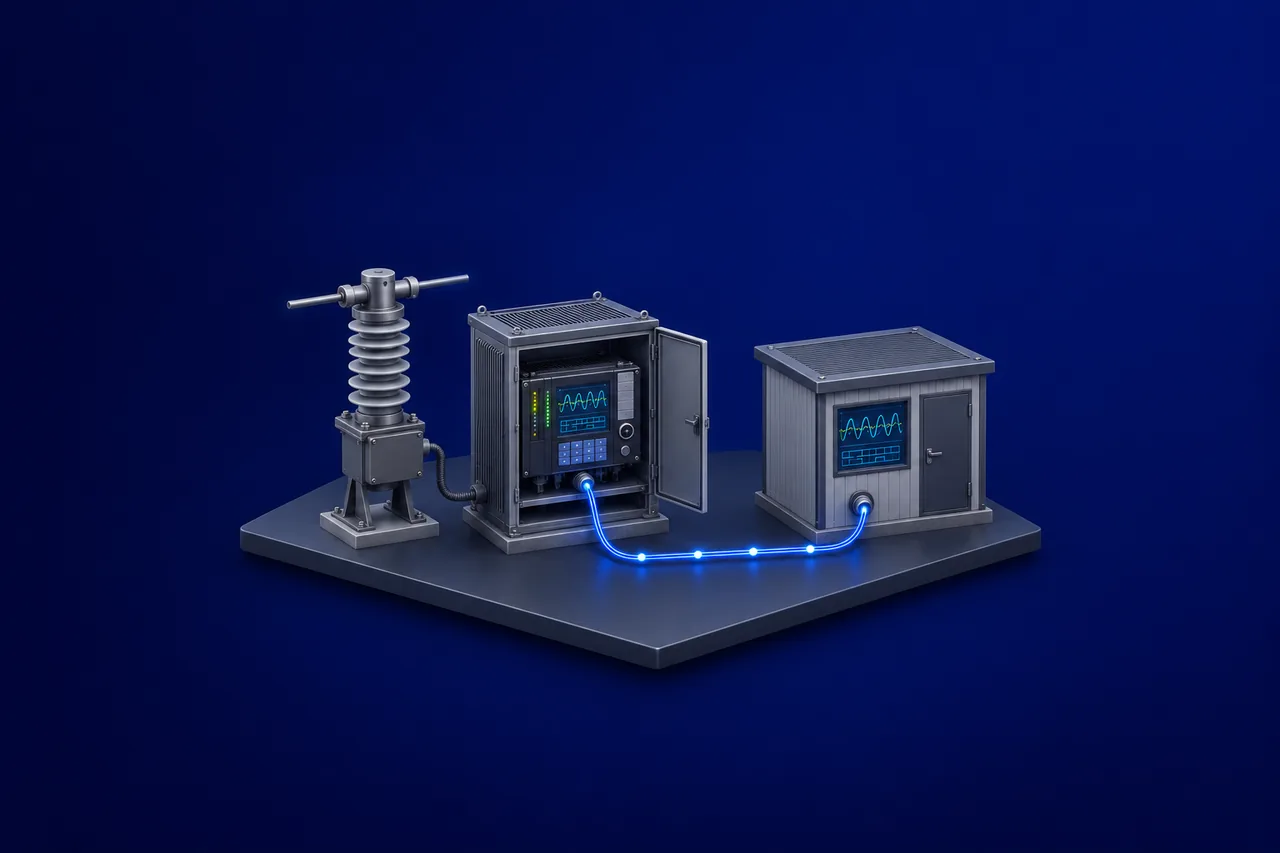
A substation is divided into four parts: the switchyard, the control room, the remote local control, and the control center. Traditionally, the switchyard and the control room are joined with copper wiring; the IEC 61850 standard makes it possible to digitize that data with Sampled Values, and that is how digital substations are born.
Two buses, two types of communication
IEC 61850 organizes substation communications into two architectures: the station bus, where information flows vertically up to the SCADA and the control center through MMS, and the process bus, which carries the information from the merging units with Sampled Values and the events with GOOSE.
- MMS
- Sampled Values
- GOOSE
Station bus
The station bus handles monitoring and control. It is defined in IEC 61850-8-1, which maps the services to the MMS protocol, and it replaces protocols such as IEC 60870-5-104 and DNP3, improving the way servers report their information.
Key fact
On the station bus, MMS replaces IEC 60870-5-104 and DNP3 for monitoring and control between the IEDs and the SCADA.
Communications over MMS
An MMS client can access the server information in three ways: through periodic polling, through unbuffered reports, and through buffered reports. Reports are configured with control blocks:
Buffered
BRCB
Buffered Report Control Block
- Stores events while the client is disconnected
- Used for digital events
- Used by a single client
Unbuffered
URCB
Unbuffered Report Control Block
- Does not store events while disabled
- Used for measurements
- Used by a single client
- Event in the IED
- Periodic poll
- Report received
- Lost event
Sampled Values and the process bus
With Sampled Values, measurements from the instrument transformers are transmitted digitally over the process bus from the merging units, while events such as trips and interlocks travel with GOOSE. Information flows quickly so the system can respond to any anomaly.
To reach several receivers at once, these messages use ranges of multicast MAC addresses: every IED that needs a frame receives the same one.
How Sampled Values work
Merging units sample the current and voltage signals at specific rates and publish them on the network. In the videos in this article you will see how to analyze those frames with Wireshark and how to bring the Sampled Values of a Siemens merging unit all the way to the AG Builder3 SCADA.