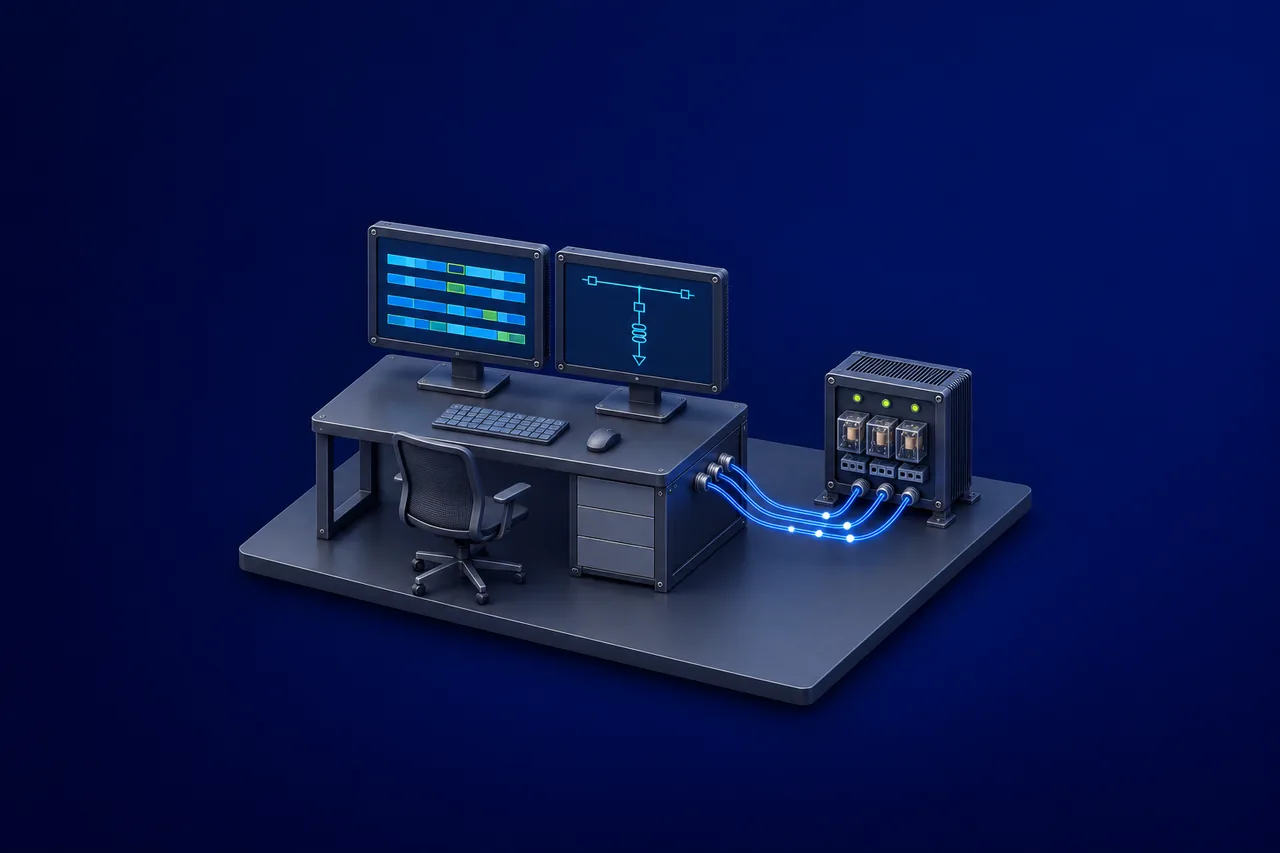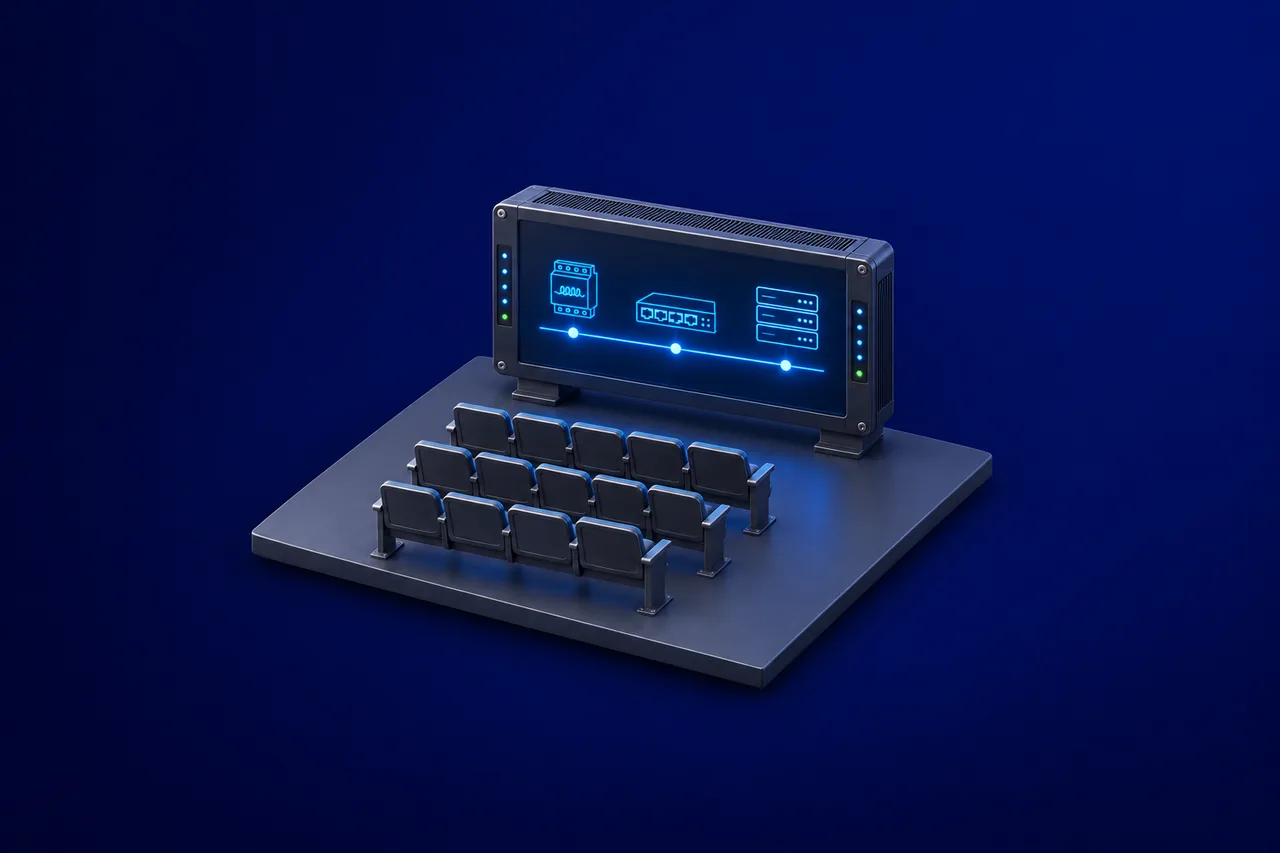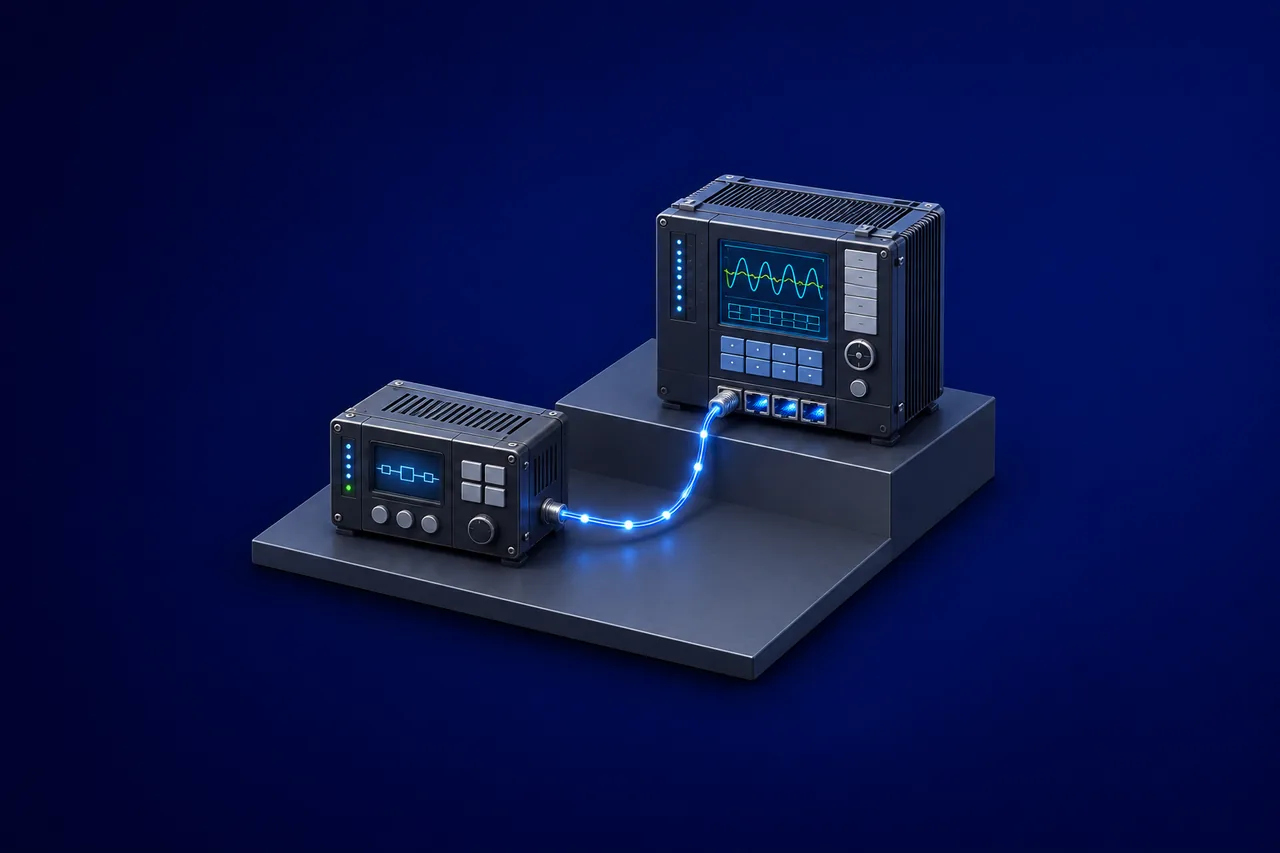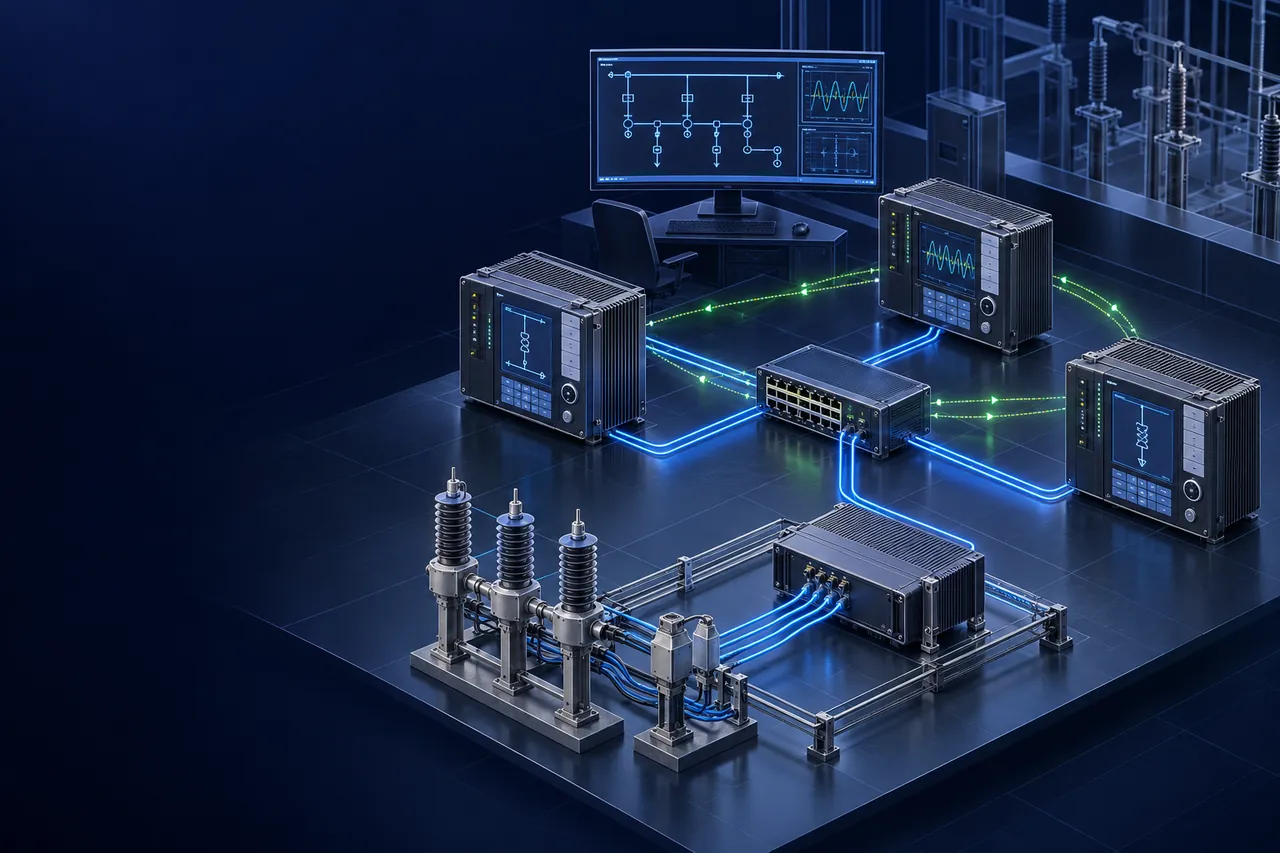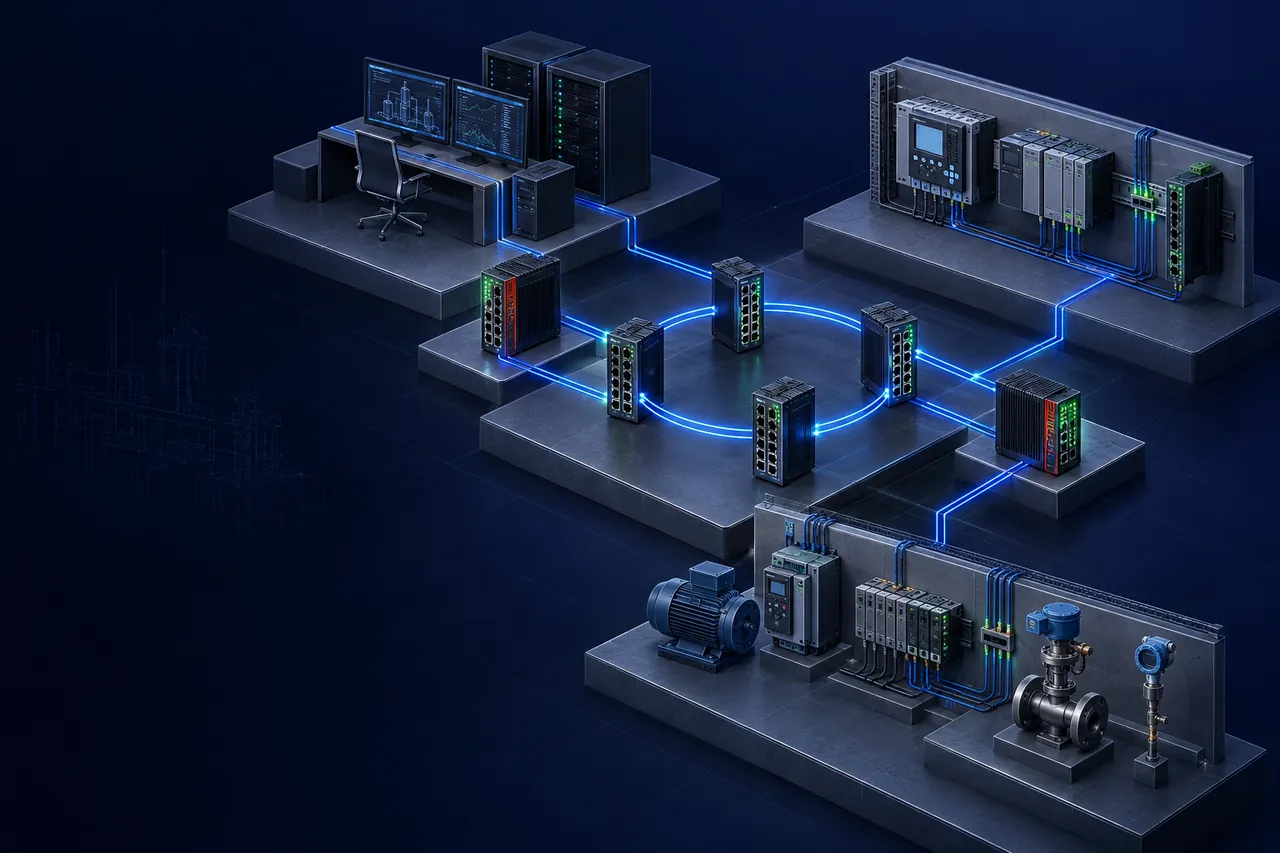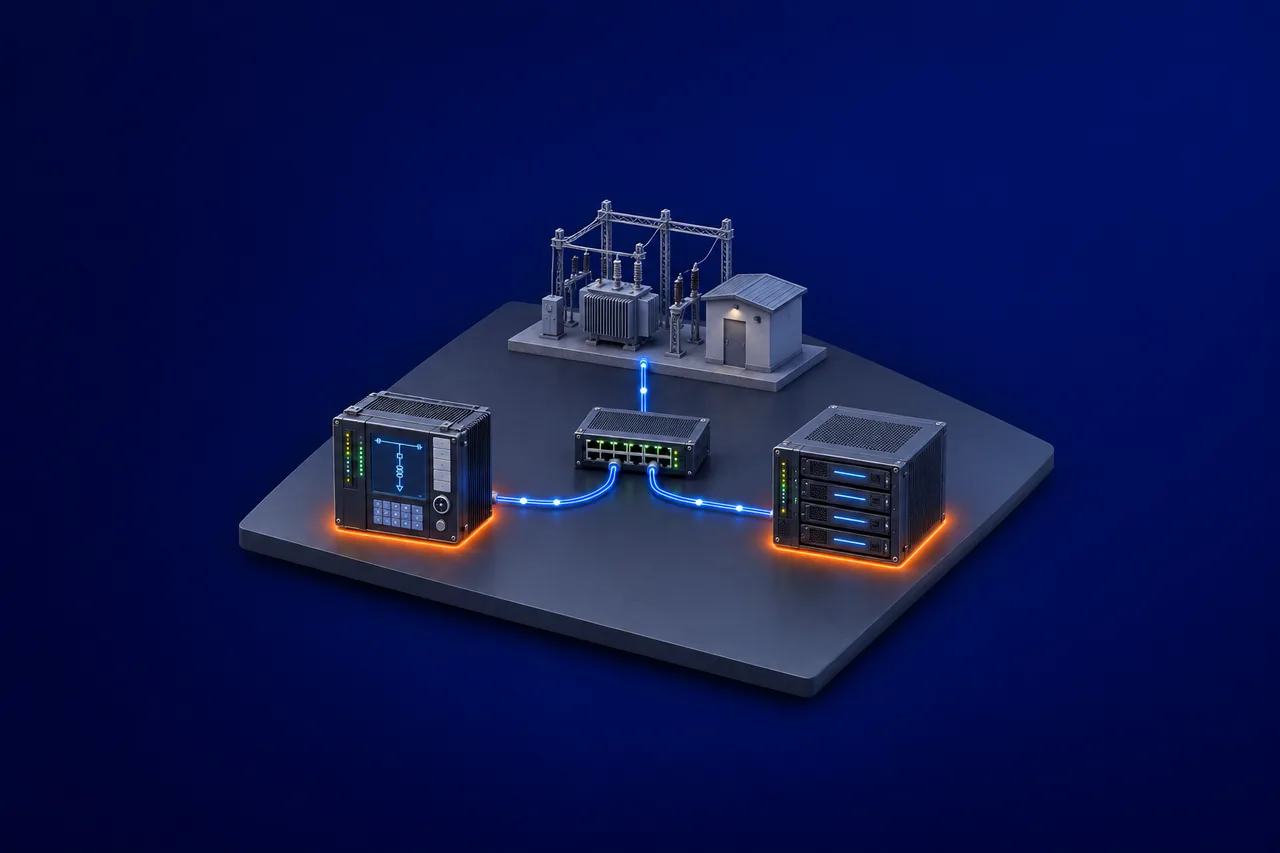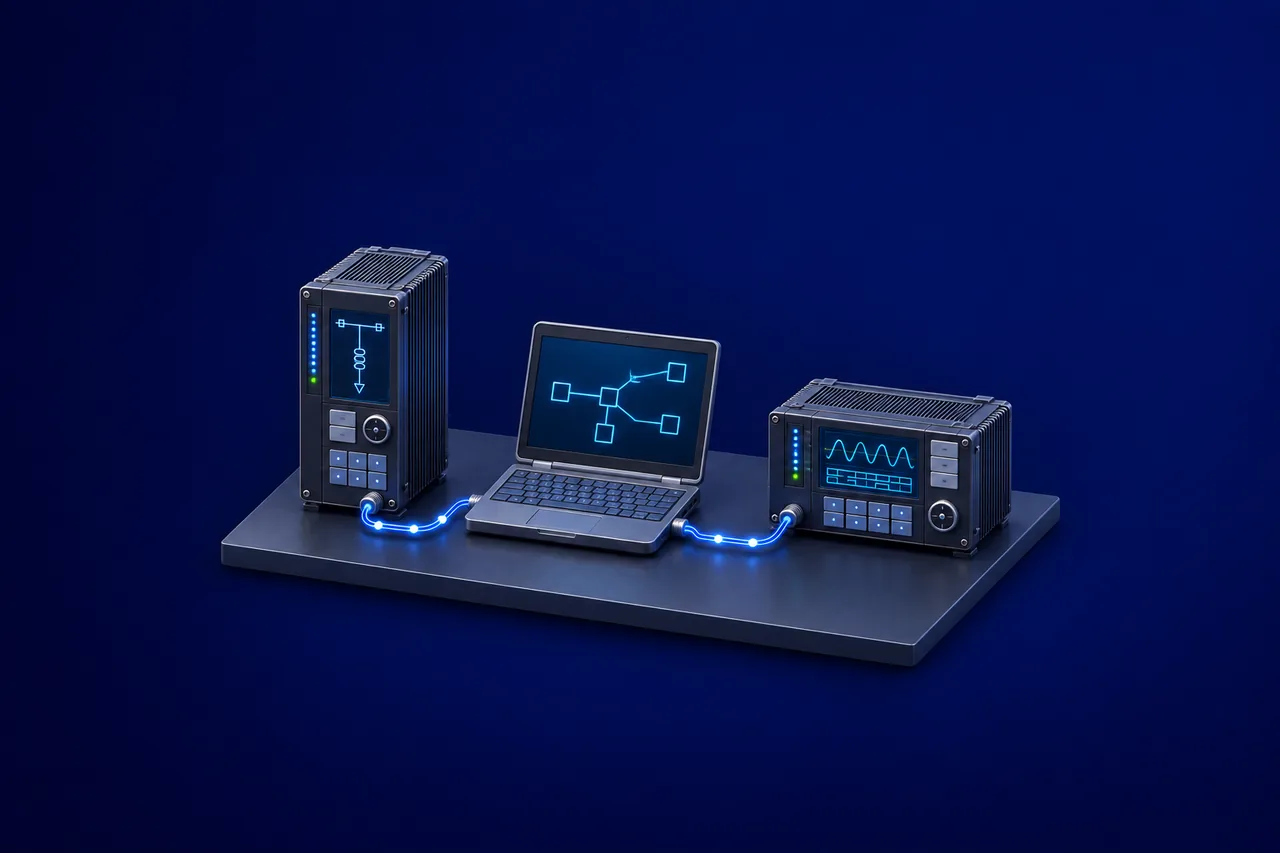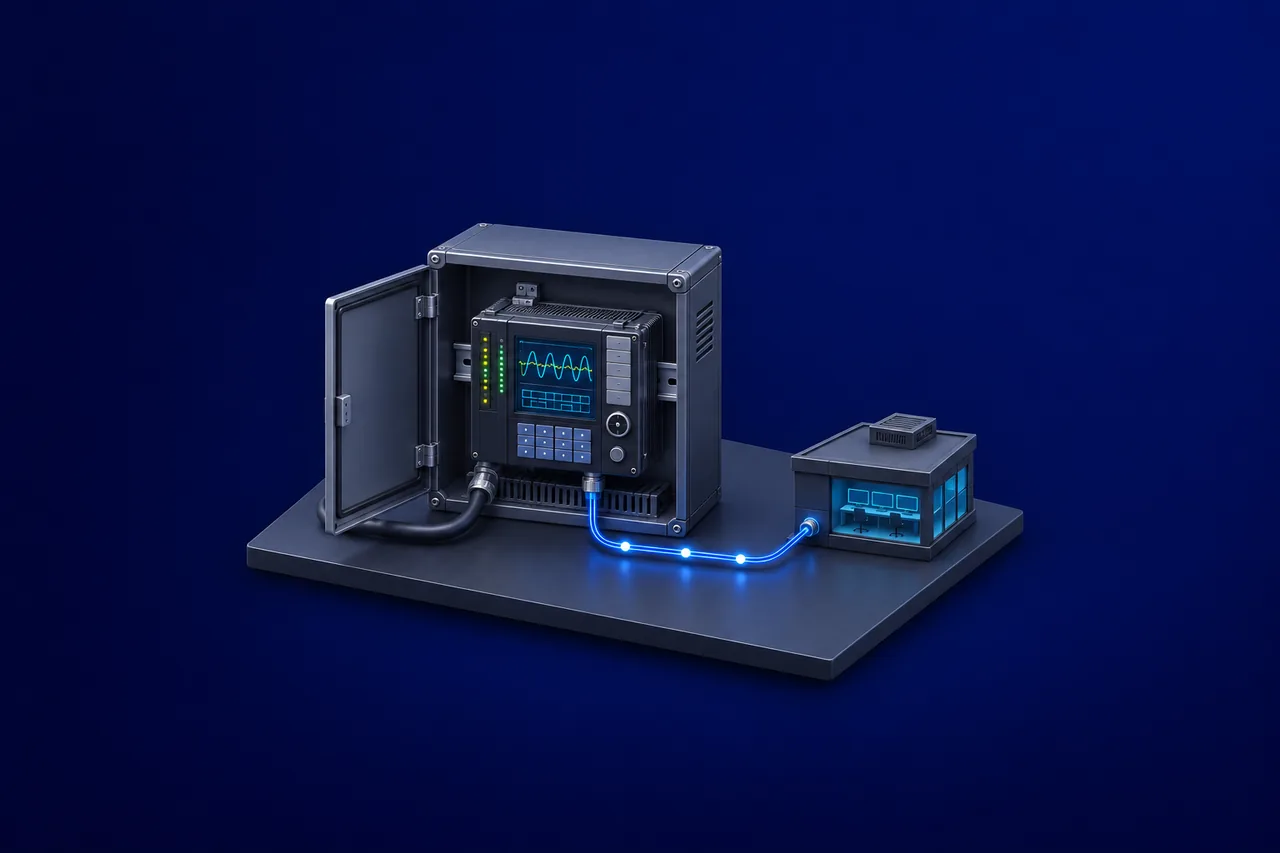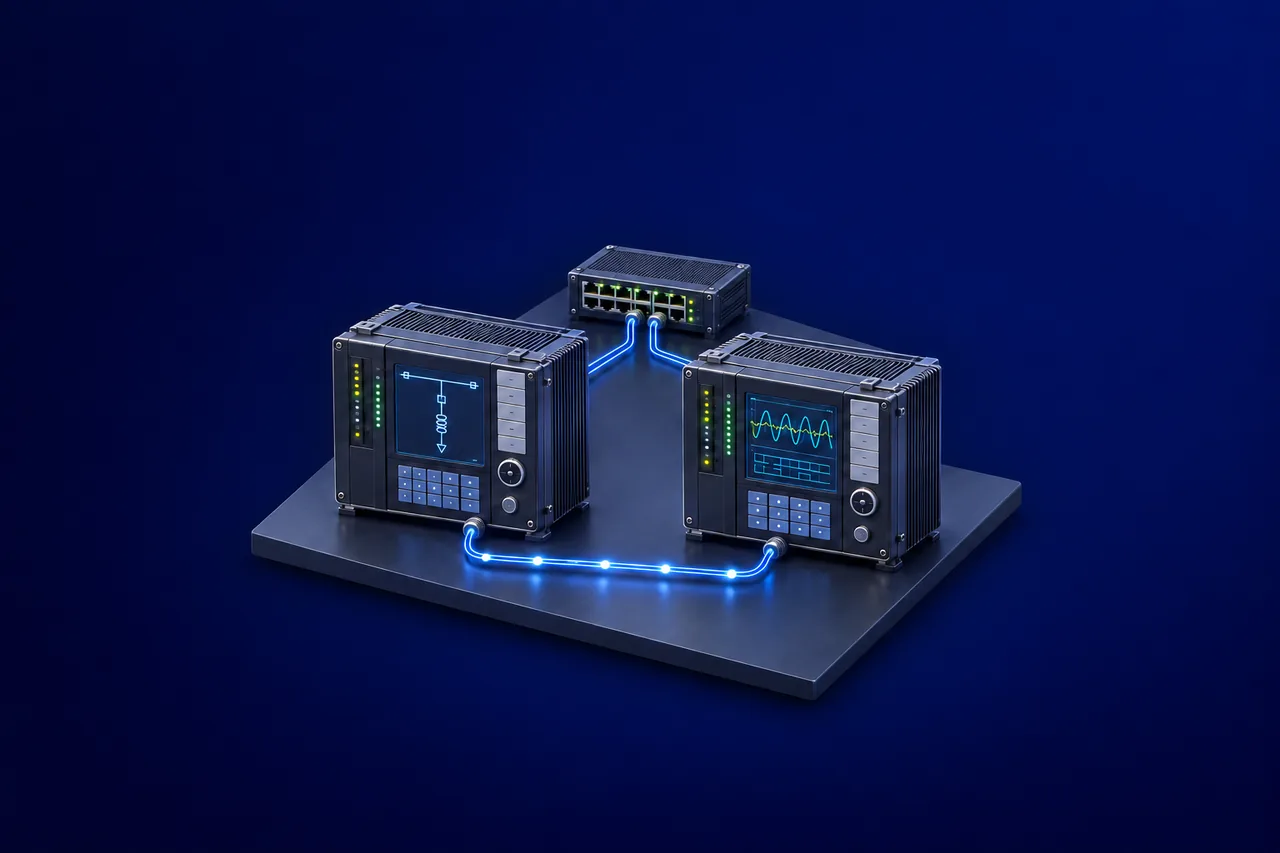
In this article we review the main GOOSE concepts, the IEC 61850 mechanism for carrying information in very short times, and apply them in a client and server simulation using AG Test6 and Wireshark.
What is GSE?
GSE is a set of mechanisms for carrying events and interlocking within a substation, including GOOSE. It provides fast, reliable communication between devices from any manufacturer, with a publisher-subscriber model and horizontal communication.
Redundancy is key: it requires zero recovery time. It is achieved with PRP, two independent networks that receive the same message at the same time, or with HSR, over a ring protocol.
Key fact
GOOSE messaging time is estimated at around 4 ms, which allows it to meet fast communication requirements.
Advantages of horizontal communication
- Less wiring
- Shorter integration time
- Greater configuration flexibility
- Can be monitored
Data sets and operation
GOOSE messages are sent using data sets, which group the required information. Because communication is multicast, every device on the network receives the message and none loses information.
The publisher stores the values in a local buffer to transmit them; the subscriber reads them from its receive buffer, and the GoCB controls the process on the publisher side.
Publishing, stack, and priority
Transmission is multicast, with a range of MAC addresses defined by IEEE for GOOSE. To be fast, GOOSE processes information at the application layer without going through the intermediate layers: only the MAC address and the signals are needed.
VLAN gives GOOSE messages priority over non-priority traffic, such as file transfers or monitoring information.
- GOOSE message
- Event
Messaging parameters
Z is the retransmission time with no changes (maximum time) and S is the retransmission time when an event occurs (minimum time); 2S, 4S… grow until they reach Z. Ideally, each message uses a different multicast MAC address.
Practical configuration with Siemens and ABB
On Siemens, DIGSI 5 is used: in the IEC 61850 configuration, the signal is dragged to the station and the report and the data set are created. In its properties, you set the identifier, destination MAC, revision, minimum and maximum times, VLAN, and priority.
On ABB, PCM600 is used, creating a generic IEC 61850 device and loading its SCL. AG Test6 is used to simulate and analyze, and Wireshark as a sniffer.