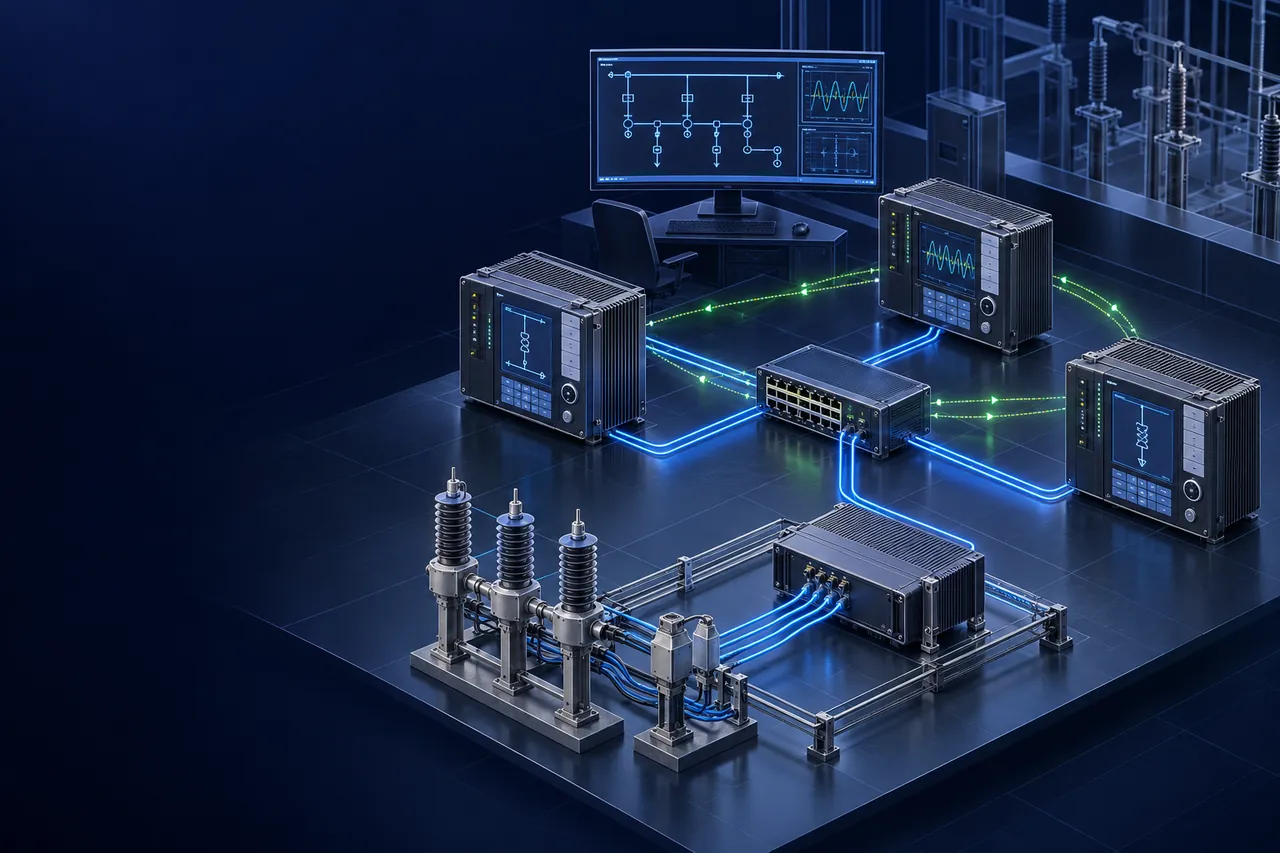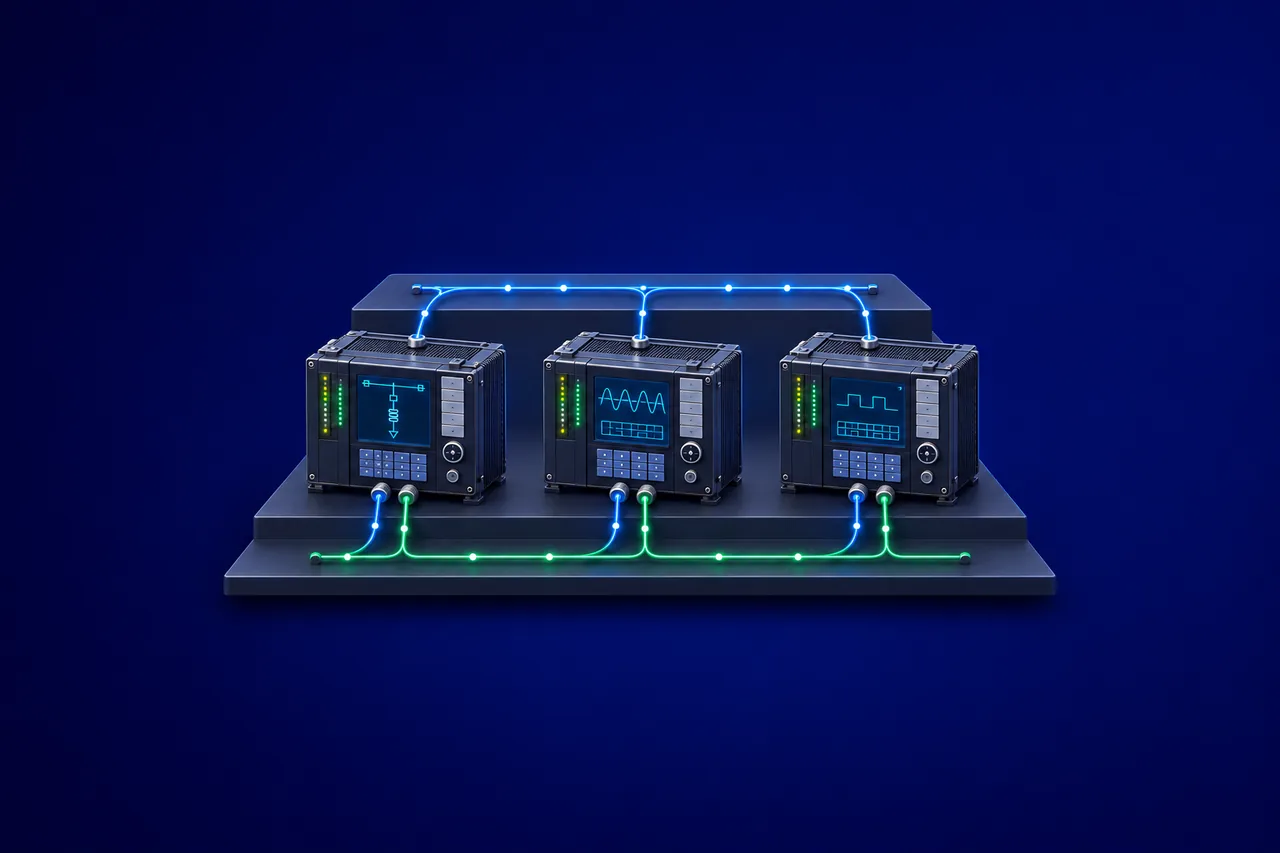
In substation automation, responding to failures and guaranteeing information integrity are key requirements. Networks without redundancy lose information and take time to reconfigure.
RSTP · IEEE 802.1W
An improvement on STP that uses redundant links in a tree topology from a root switch: when a failure occurs, it takes an alternate path. It prevents loops at the link layer and reconfigures in about 6 to 10 seconds.
Key fact
With PRP, the reconfiguration time after a failure is 0 seconds: the flow of information is not interrupted.
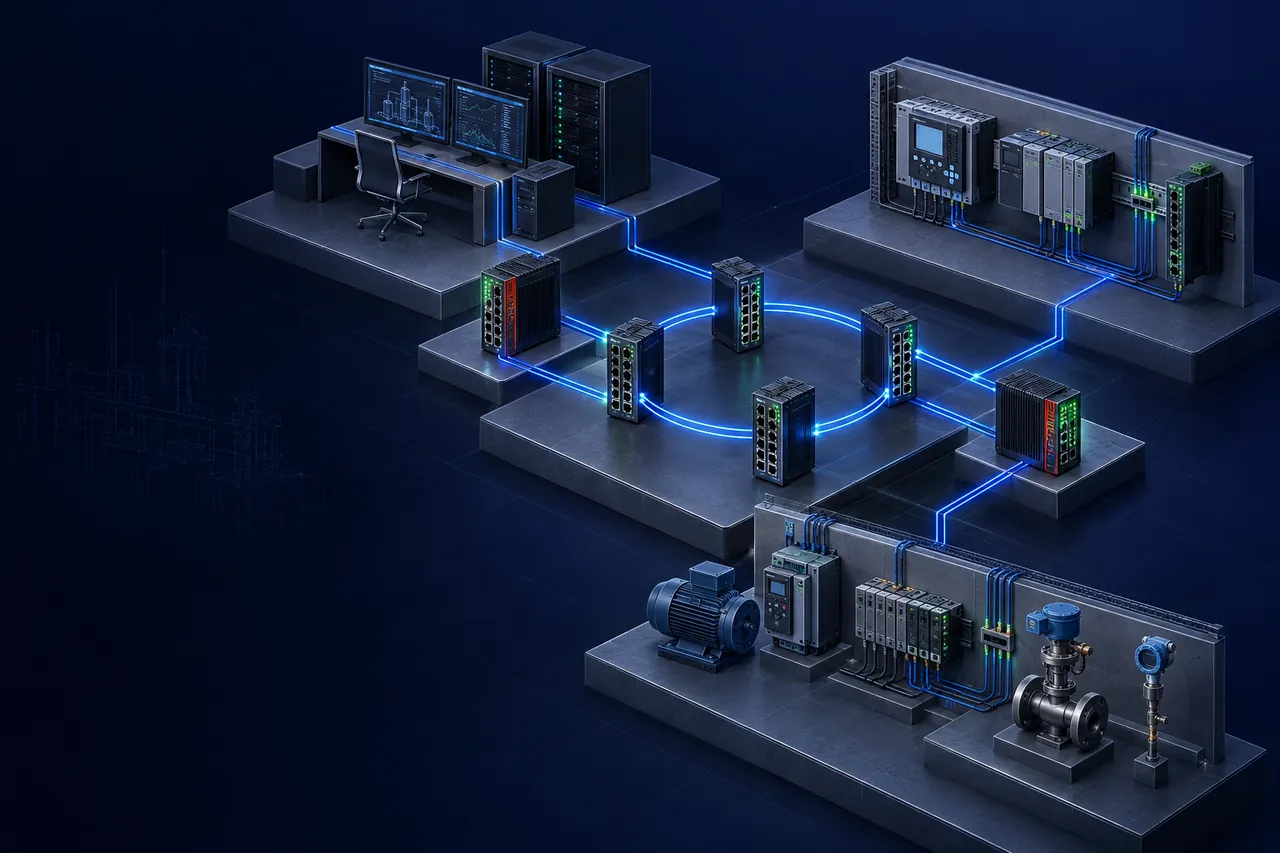
MRP · IEC 62439-2
Redundancy over a ring in which one device manages the configuration and the direction of the flow. It is simple to implement, but it takes about 200 ms to reconfigure, which makes it poorly suited to substation control.
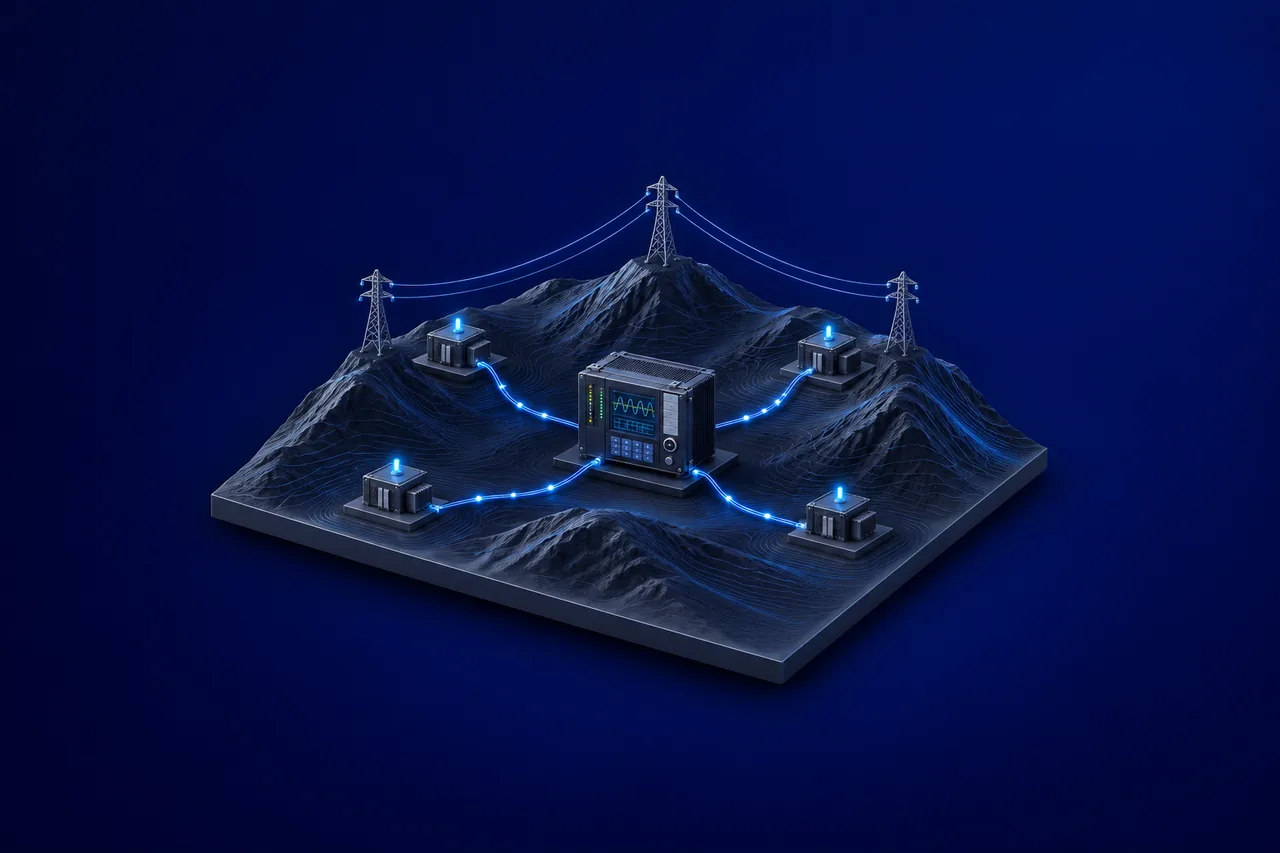
MPTCP · MultiPath TCP
Designed for mobile telecommunications: it creates TCP subflows over several interfaces at once, with better throughput and an immediate response to failures.
- Copy over LAN A
- Copy over LAN B
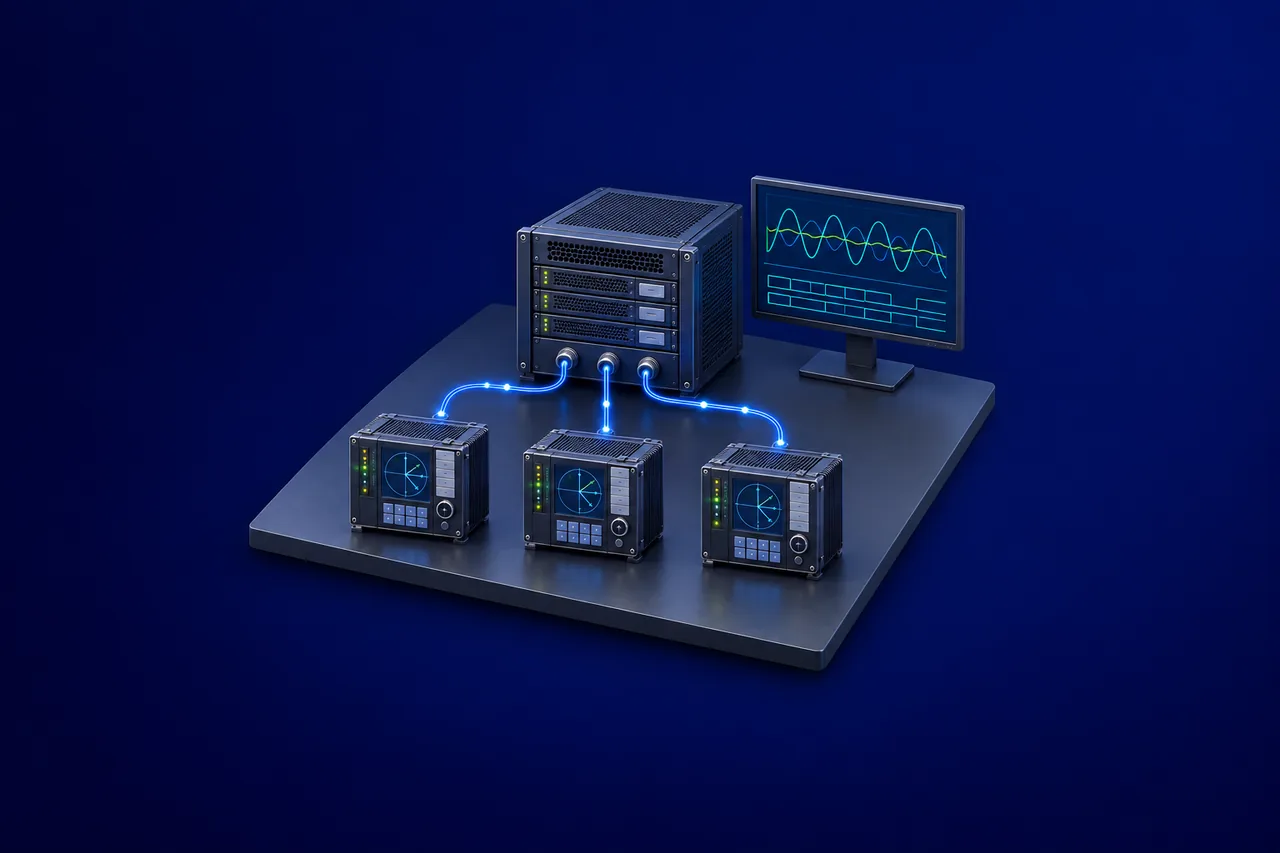
PRP · Parallel Redundancy Protocol
Redundancy lives in the nodes: each PRP node connects to two independent LANs that operate in parallel. It reconfigures in 0 seconds and is interoperable across vendors such as Axon Group, Siemens, ABB, SEL, and GE.
A RedBox connects devices without PRP support. Its drawback is that it duplicates the network, but it is necessary for high availability in generation and distribution.
HSR · IEC 62439-3.5
It works with PRP in rings and ring arrangements. Each DANH node sends the duplicated frame through its two ports; the receiver keeps the first copy and discards the other. With no reconfiguration time, it is viable for control and data acquisition.